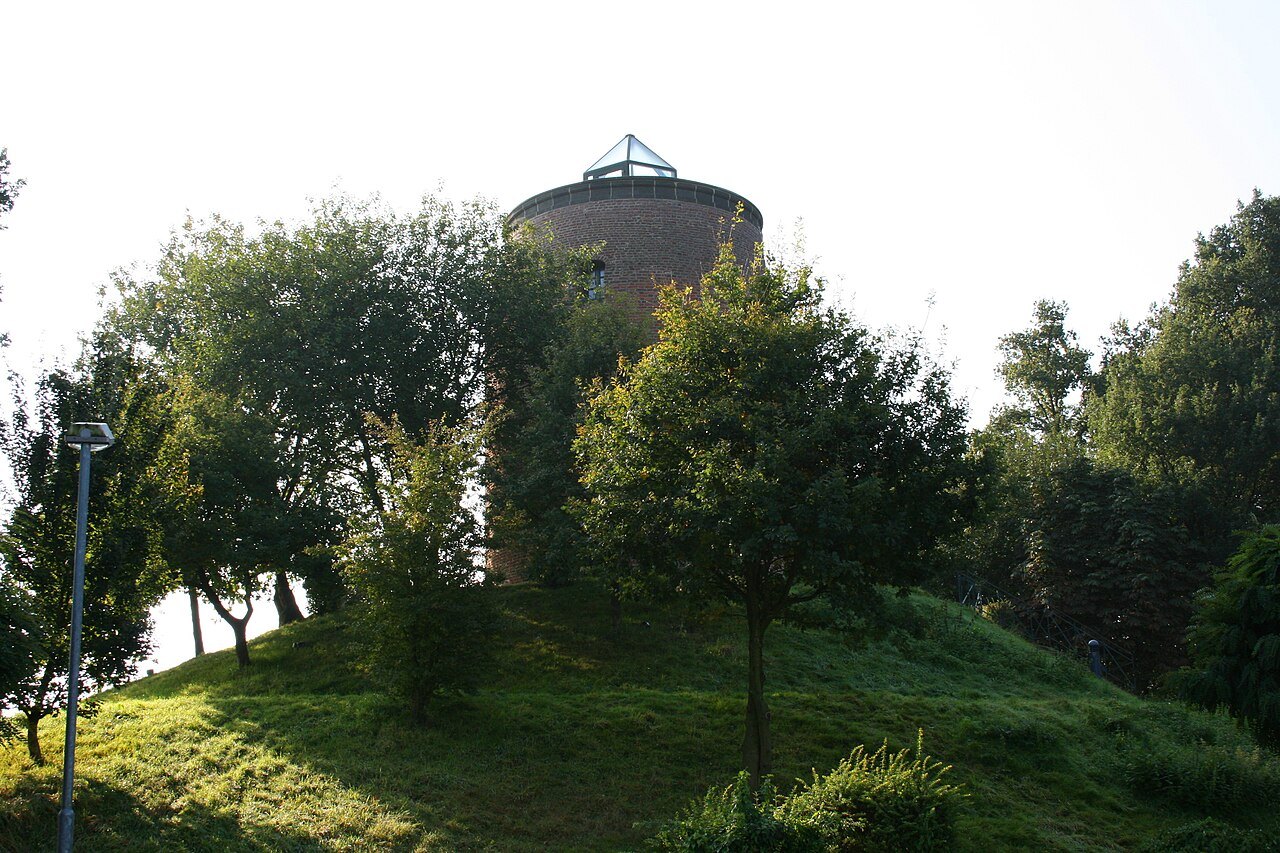

Uedem and Hohe Mühle can form two parts of one outing: the village centre first, followed by the mill on Mühlenstraße. Check the connection on a map rather than assuming that two destinations sharing a place name stand immediately beside each other. Anyone preferring less walking can approach the stops separately and take a short stroll at each.
The centre before the mill
In the centre, the subject is the scale of an inhabited place. Streets, entrances, shops and squares remain in everyday use. Select a short section and notice which buildings hold a street scene together. A village walk does not have to begin with a complete list of historical dates. One clear question, such as how a street opens into a square, is enough.
Save your starting location before moving towards the mill. When using public transport, include the final connection back to the stop actually served by your journey. A navigation destination labelled Hohe Mühle identifies the attraction, not the whole transport chain.
Reading a mill from outside
At Hohe Mühle, first consider the building's position in the landscape. Windmills have a relationship with wind and surrounding development. Compare a close view with one taken farther away from a public path. Some distance makes the structure's role as a landmark easier to understand.
A surviving mill does not necessarily grind grain during every visit. The local heritage association provides information about Hohe Mühle and its history. Check there to establish which areas are currently accessible and whether an exhibition or event is taking place. Open outdoor grounds do not automatically mean that every interior can be entered.
Do not assume the refreshment stop
The municipality lists a café at Hohe Mühle and refers visitors to the association for current information. A planned break there should therefore depend on checked opening arrangements. Bring something to drink for a spontaneous visit rather than making the whole length of your stay depend on an unconfirmed café stop.
For families, the contrast between the centre and the mill may be sufficient. Ask children what makes the mill recognisable from a distance. Afterwards, decide together whether anyone still wants another walk. Returning with a clear impression is preferable to adding distance merely because some time remains in the schedule.