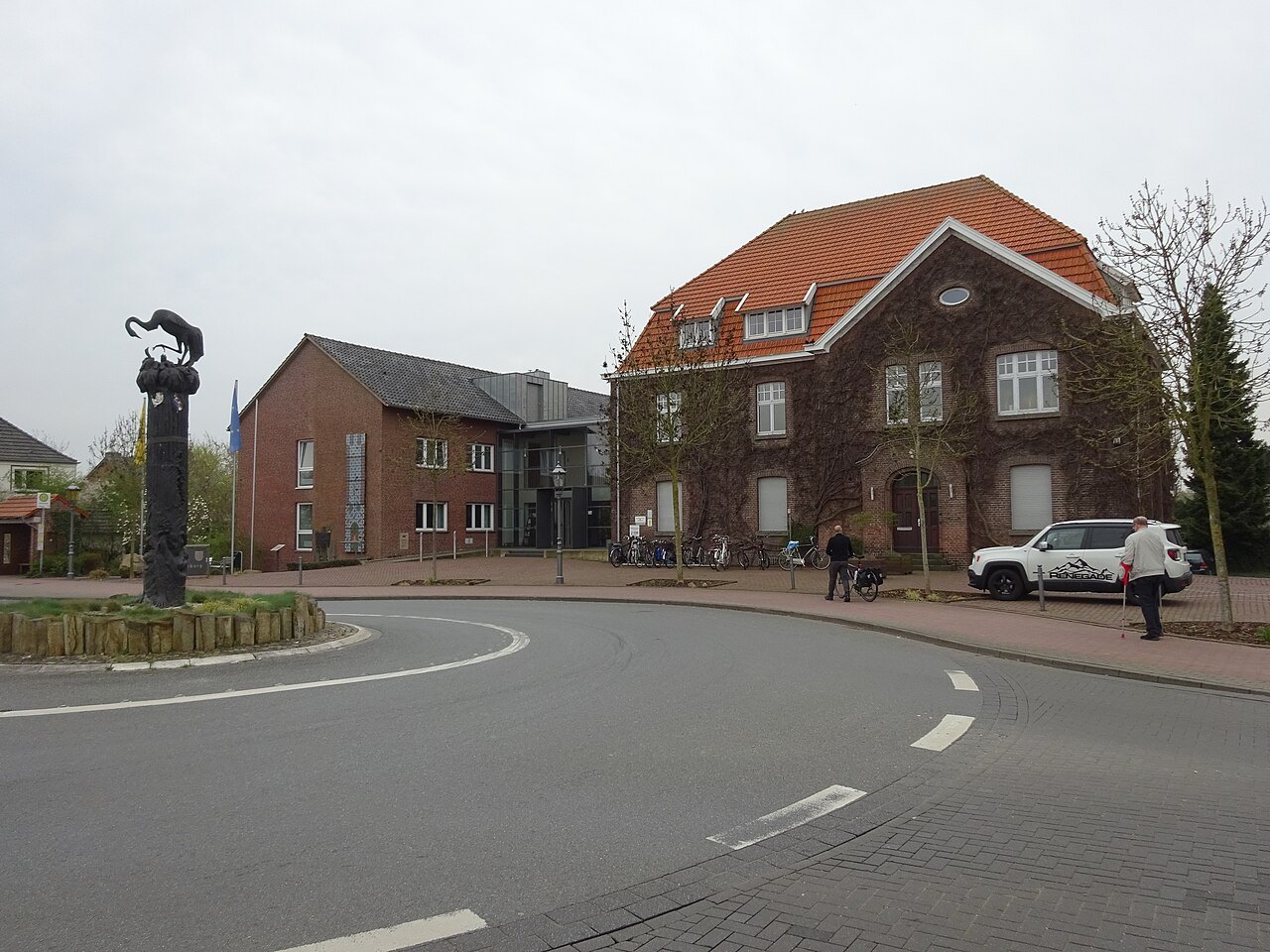

Kranenburg is especially rewarding to explore through its plan. The municipal conservation-area rules protect not only individual buildings but also the street network, silhouette and visual relationships. That offers visitors a useful clue: history exists in the space between buildings and the course of a street as much as in a decorated façade. Begin a walk with the shape of the place itself.
A main line and its edges
Große Straße provides an important reference within the historic centre. The conservation explanation describes a planned settlement and a substantially preserved medieval street structure. As you walk, notice plot widths and the sequence of façades. Different houses can collectively reveal an older pattern of land division even when their fronts are not all the same age.
Then leave the main line along a public connection towards the former defensive edge. The transition from closely spaced buildings to wall or rampart areas makes the old boundary tangible. Use a current town map for this. A historical plan explains former shapes but does not replace present-day route information.
One tower with several purposes
The Mühlenturm brings together defence and economic use. The German Foundation for Monument Protection describes it as part of the late-medieval fortifications, later also used as a windmill and prison. The local museum association interprets its history. One building can therefore carry several stories that cannot be reduced to a single label.
First consider the tower's body and its position near the edge of the centre. Which role does the exterior suggest, and which only becomes clear from an explanation? Check current opening arrangements if you want to enter the museum. Even with the interior closed, the relationship between tower, wall and streets remains a concrete subject for your visit.
See a centre where people live
St. Peter and Paul, the Katharinenhof and the Mühlenturm stand within the historically developed area. You do not have to visit every interior in one day. Choose one focus and leave time for the routes between them. It is there that homes, businesses and cultural institutions become visible as parts of one town centre.
At the end, look back along a street you previously followed in the opposite direction. Its silhouette and sequence of gables may appear different. Remember that observation instead of taking away only a list of buildings visited. Kranenburg becomes especially clear through relationships: centre and edge, public path and home, inherited plan and later use.