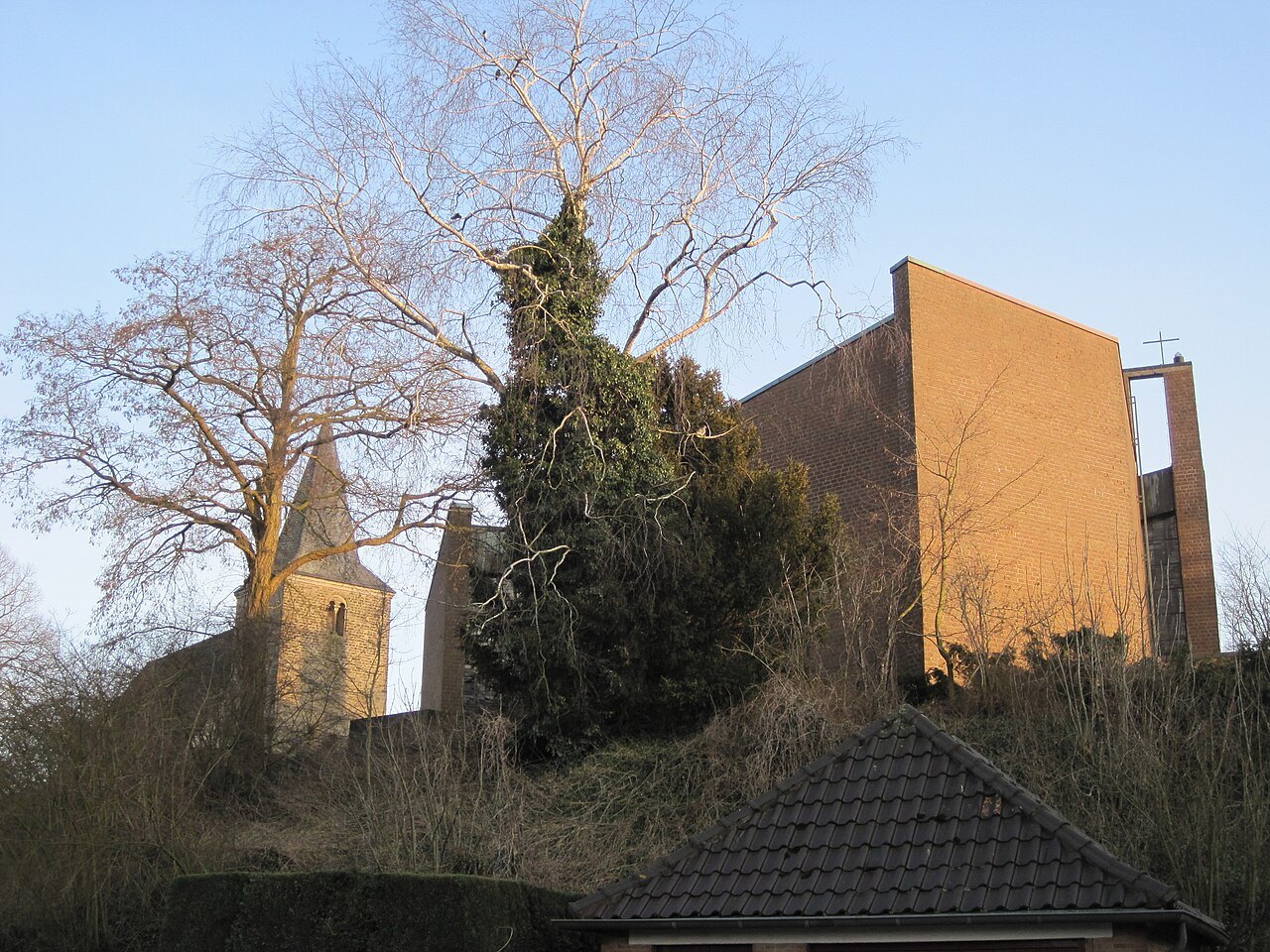

A walk in Wyler can begin with a simple puzzle: why does this small village have an old church and a new one? The parish explains the pair through a history of destruction and rebuilding. This gives visitors a specific focus that does not reduce the village to its proximity to the Netherlands. The border remains part of the setting, but it is not the only subject.
Distinguish the two churches carefully
The parish describes both the old Romanesque village church and the then newer Neo-Gothic parish church as destroyed at the end of the Second World War. The old church was rebuilt, while the present new parish church dates from the 1960s. “Old” and “new” therefore do not simply mean a wholly untouched medieval building beside an arbitrary addition.
Start with exterior forms. Compare proportions, windows and the effect of the entrances. Which shape feels enclosed, and which opens differently towards its surroundings? Describe what you see before judging it. Buildings of different periods solve related tasks in different ways, and reconstruction itself belongs to local history.
Arrange an indoor visit
The parish information gives services or prior arrangement as the framework for access in Wyler. Do not expect unrestricted sightseeing at any time. During worship, religious use takes priority. Comparing the exteriors can nevertheless make a complete short visit.
With children, look for repeated shapes such as arches, rectangles or arrangements of doors. Then ask how a public entrance can be recognised and which areas seem private. This makes architecture tangible without turning the walk into a lengthy lesson in building history.
Make the border connection deliberate
Wyler belongs to the municipality of Kranenburg. If combining it with a destination across the Dutch border, check the precise route and return separately. A short distance on a map does not establish whether the connection is comfortable for your chosen form of travel. A village stroll and a longer border itinerary are different undertakings.
Keep doorways and driveways clear and do not assume that every small street belongs to a visitor circuit. Finish by considering the churches in relation to the surrounding homes. This reveals how a village has retained older forms while creating new spaces for shared life. A manageable stay with one clear subject is enough to understand that relationship.