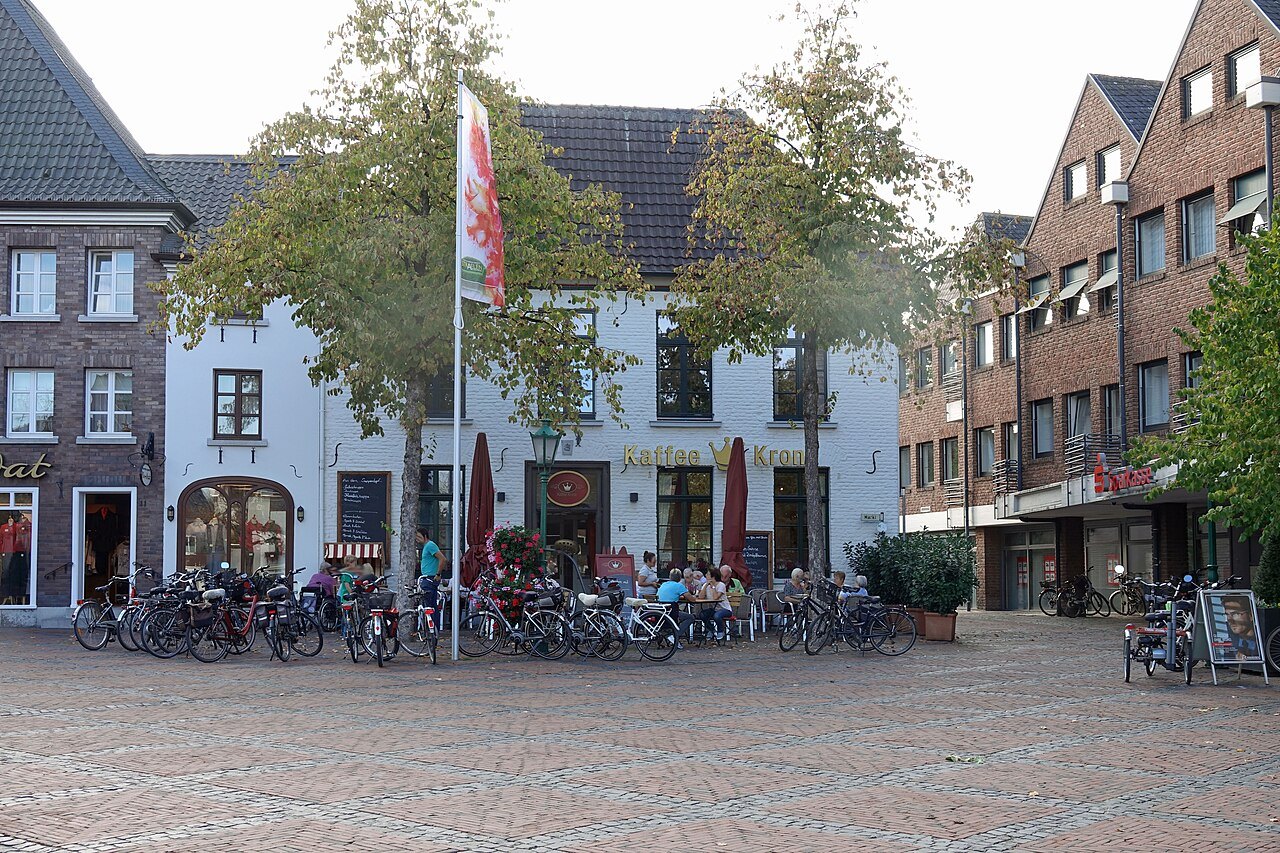

Straelen combines a historic town centre with surroundings in which horticulture is a substantial working industry. A visit benefits from considering these two layers together while keeping their uses distinct. The market is a public place to spend time. Glasshouses, auction facilities and growing areas are workplaces first, even when they look attractive in an outing photograph.
History at the fountain
The market fountain depicts Archbishop Anno II. The municipal history connects him with the transfer of rights to Siegburg Abbey in the eleventh century. That reference is enough to make the figure more than anonymous decoration on a first walk. Then look at the houses surrounding the square and the routes leading into the centre.
The present appearance also owes much to town-centre renewal between 1969 and 1992. A historic atmosphere therefore does not mean that every surface and arrangement has remained unchanged for centuries. The relationship between preservation and new uses makes a useful subject: where do present-day shops, entrances and places to sit fit within older structures?
Understanding flowers as an industry
The town's history identifies the vegetable auction established in 1914 as an important step in commercial horticulture. Cut flowers and plants later gained a larger role. This explains why Straelen's connection with growing extends beyond decorative flowerbeds to cultivation, trading and transport.
For a closer understanding, enquire about the horticultural tours offered through the town. An organised visit establishes which businesses can be entered and what will be explained. Without an arrangement, remain on public routes. Neither an open warehouse door nor a photographic opportunity gives access to a working site.
Combining landscape and market
The centre alone can fill a modest visit. For a longer outing, choose a published cycle route through the growing area, for example around Auwel-Holt. Check its full distance: a regional circuit is not automatically a short addition after a coffee break.
Along the way, examine how the landscape is organised. Large glass surfaces, access roads, blocks of fields and settlements form a functional pattern. Stop outside entrances and leave space for agricultural vehicles. Back at the market, you can then understand the same place at two scales: as a town where people live and meet, and as part of a cross-border production region.