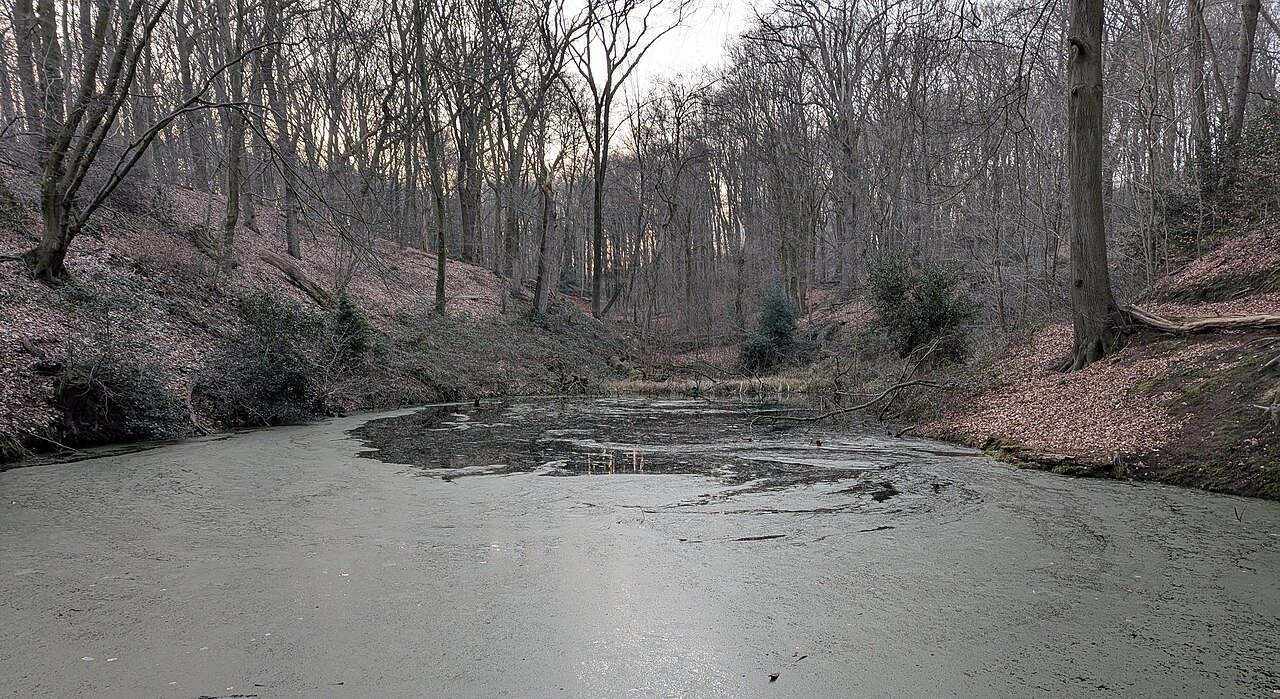

When travelling from the flat Niers lowland to Sint-Jansberg near Plasmolen, reset your expectations about walking distances. The area occupies a ridge formed by glacial pressure. Woodland paths rise and fall, water emerges in lower areas, and cultural traces accompany nature observation. This combination is interesting, but it calls for a more carefully selected route than an improvised level waterside stroll.
An entrance does not represent the whole area
Natuurmonumenten points visitors to information on site and explains that routes are not actively promoted online because of visitor pressure. Respect that approach: use current information at the entrance rather than spreading a visit onto supposedly hidden paths from older records. If a section is closed, adapting the route is part of visiting.
Before starting, establish which gradients, surfaces and return connection suit the group. A short line on the map may involve steps or a steep slope. A pushchair or walking aid therefore requires confirmation that the specific route is suitable; the general name of a woodland is not enough.
Read slope and water together
The protected-area information identifies several spring zones. For observation, ask how damp and dry positions differ within the visible ground. Is vegetation denser in a hollow? Does a small stream run at the foot of a slope? Do different trees stand beside a wet patch? These contrasts can be noticed without stepping off the path.
Do not treat the shape of a hillside as an invitation to shortcut. Apparently direct connections may cross sensitive spring ground or steep terrain. Follow the intended alignment even when the destination is already visible through the trees. The longer bend is often the usable approach.
Choose historical stops deliberately
Bovenste Plasmolen and the representation of a Roman villa are among the area's cultural references. Both need not be added to every walk. Decide whether the main focus is woodland and terrain or one particular historical stop. Check any visiting arrangements separately.
After a climb, pause briefly to regain orientation before continuing downhill. Wet leaves and roots deserve attention even when the view is distracting. Keep some return time free instead of allocating every minute to another destination. Afterwards, describe the outing through its actual slopes and observations, not just its kilometre total. This makes the account more useful to another walker and helps distinguish a comfortable woodland visit from a short-looking route that demanded much more concentration than expected.