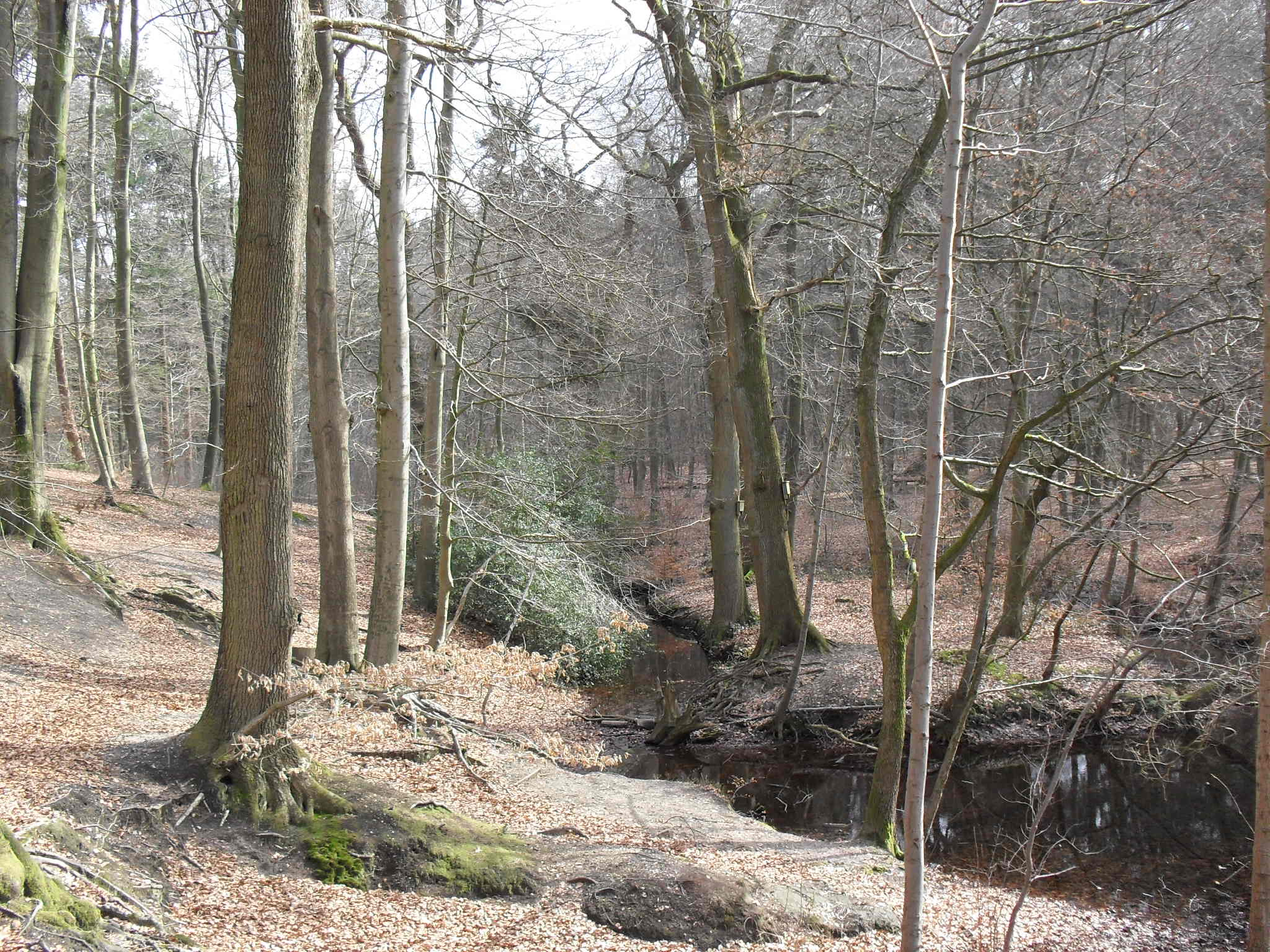

The Klever Reichswald is large enough that “we are going to the forest” is not yet a useful plan. Kleve's tourism information describes woodland covering around 5,100 hectares and points visitors towards a dedicated walking map. For a relaxed day, choosing a suitable entrance and a return route you understand matters more than linking as many attractions as possible. The considerations below help with that choice; they are not a substitute for a specific, current route map.
A starting point is more than a car park
Begin with the exact place where your walk will start. Save its position and the name of the nearest road. If arriving by public transport, also check the walk from the stop to the forest entrance and your return connection. A woodland symbol on an overview map says little about where a useful entrance lies. Equally, a line on the map does not automatically represent a footpath suitable for everyone in your group.
The town's Reichswald brochure marks several parking areas and destinations, including Sieben Quellen and Geldenberg. Use an overview like this to narrow down the part of the forest first. Only then choose a waymarked walk or a route whose description you can follow. Two interesting names on the same map are not a recommendation to join them in one afternoon. Plot the start, destination and return together before committing to a circuit.
Distance does not describe the whole walk
A short path with roots, soft ground and a slope may demand more effort than a longer firm track. Ask the tourist information office about the surface and condition of your intended route, particularly when bringing a pushchair or walking aid. A forest outing is not automatically accessible simply because the wider region is called the Lower Rhine. The state information portal for wilderness areas specifically describes varied relief in part of the Reichswald.
For a group, select the route around the slowest person's pace and include breaks as part of the outing. Children comparing leaves or listening for sounds are already enjoying the purpose of a forest day. A tightly scheduled circuit puts these small pauses under unnecessary pressure. On a first visit, an out-and-back walk may be easier to judge than a loop with an unfamiliar second half.
Check your bearings early
Save your map before setting out so that it remains available without a data connection. At the first junction, check that your position, the mapped paths and any waymarks agree. This brief check is more useful than a long debate once everybody is tired. Photograph the information board at the start if helpful and keep the return in mind, although a photograph is no replacement for a sufficiently detailed map.
A sensible turnaround point depends on remaining daylight, the group's energy and the journey home. Do not wait until you have reached a landmark to consider it. If a marker is missing or a path is closed, avoid improvising an extension through the trees. Return to the last place you can identify confidently, then assess whether a signed alternative genuinely fits your plan and the time available.
Adapt the outing to the conditions
After rain, a walk may put very different demands on shoes and clothing from a stroll through town. Carry water and something to eat rather than assuming there will be refreshments along the way. An extra dry layer is particularly useful when children spend time playing on damp ground or the journey home is lengthy. Keep your equipment manageable, but avoid putting everything essential in the bag of someone who tends to walk far ahead.
A forecast of strong winds is a reason to change the forest plan. North Rhine-Westphalia's agriculture ministry notes that branches can continue to fall and trees can topple after a storm has passed. Respect closures and choose another activity in these conditions. A fallen trunk is not a dependable play structure: timber and lifted root plates can remain under tension.
For an unhurried walk, stay on the intended paths and observe fungi, bark and animals from there. Take litter home and leave room for others to pass. Photographing the woodland does not require stepping into the undergrowth. A short, familiar stretch often reveals more when you slow down and notice how the same place looks from the opposite direction on the way back.