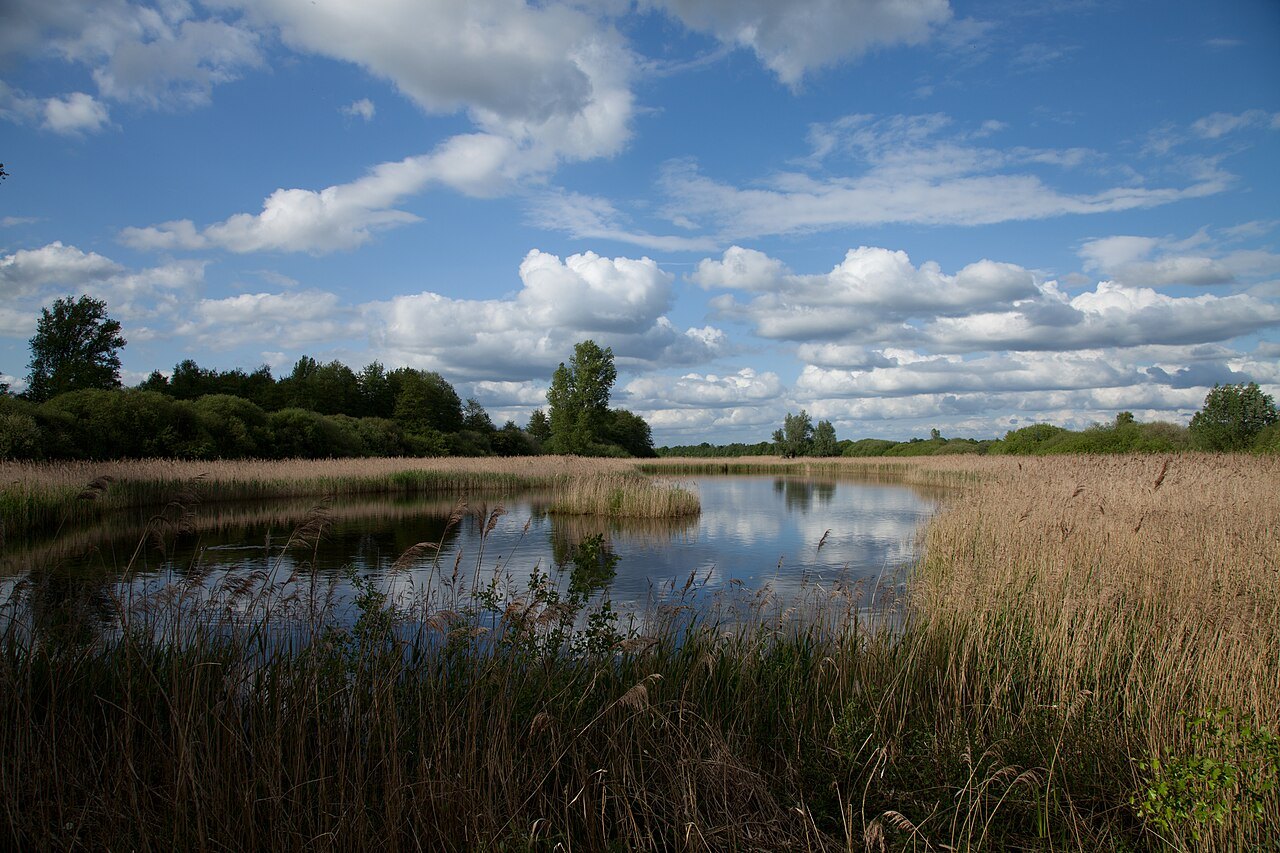

Kranenburger Bruch lies between Kranenburg and Nütterden. Wet meadows, reedbeds and woody vegetation meet within a relatively small area. The NABU nature station describes it as an important remnant of fen habitat. For a visitor, that information is more useful than a long list of rare species: it explains why water, soil and undisturbed transitions between habitats belong together.
Seeing enough from the edge
The managing station points visitors towards walking and field paths around the reserve and an observation hide near the Kurze Hufen/Tüthees parking area. Check the current map and signs before choosing your route. Roads within the area are not automatically open to visiting cars. Use designated parking instead of narrow entrances or verges.
A view from the edge may seem less immediate than walking through the reeds. In fact, it can reveal more relationships: the boundary between meadow and reedbed remains visible, along with the position of separate groups of trees. Ask where an animal might find shelter and where it might search for food. Nobody needs to touch a plant or enter a hidden section to consider those questions.
Listen without demanding a response
Some birds remain concealed in the vegetation. Choose a quiet standing place for a few minutes and distinguish nearby sounds from distant ones. Traffic, wind moving through stems and animal calls overlap. An unidentified sound can remain unidentified; playing calls to provoke a response does not fit an undisturbed visit.
For families, try a small sound sketch. Put your position in the centre and mark sounds around it according to direction. Write “short call on the left” rather than guessing a bird's name. Afterwards, consider which sounds continued and which occurred only once. The activity needs neither access to the meadow nor a telephone in every person's hand.
Damp paths are still the paths
Edges can become soft after rain. Avoid moving progressively farther into vegetation simply to keep footwear clean. If a section is unsuitable, shorten the circuit. The station specifically asks visitors to remain on paths and keep dogs on leads.
Make quiet observation the actual purpose of the outing. Fewer kilometres with two concentrated pauses can reveal more than a fast complete circuit. At the end, record the vegetation boundaries and water surfaces you saw. A later visit can build on these observations without measuring success by whether the same animal appears again. Sketching the arrangement of habitats also provides a useful reminder of where each observation was made, even if no photograph captured the detail clearly.