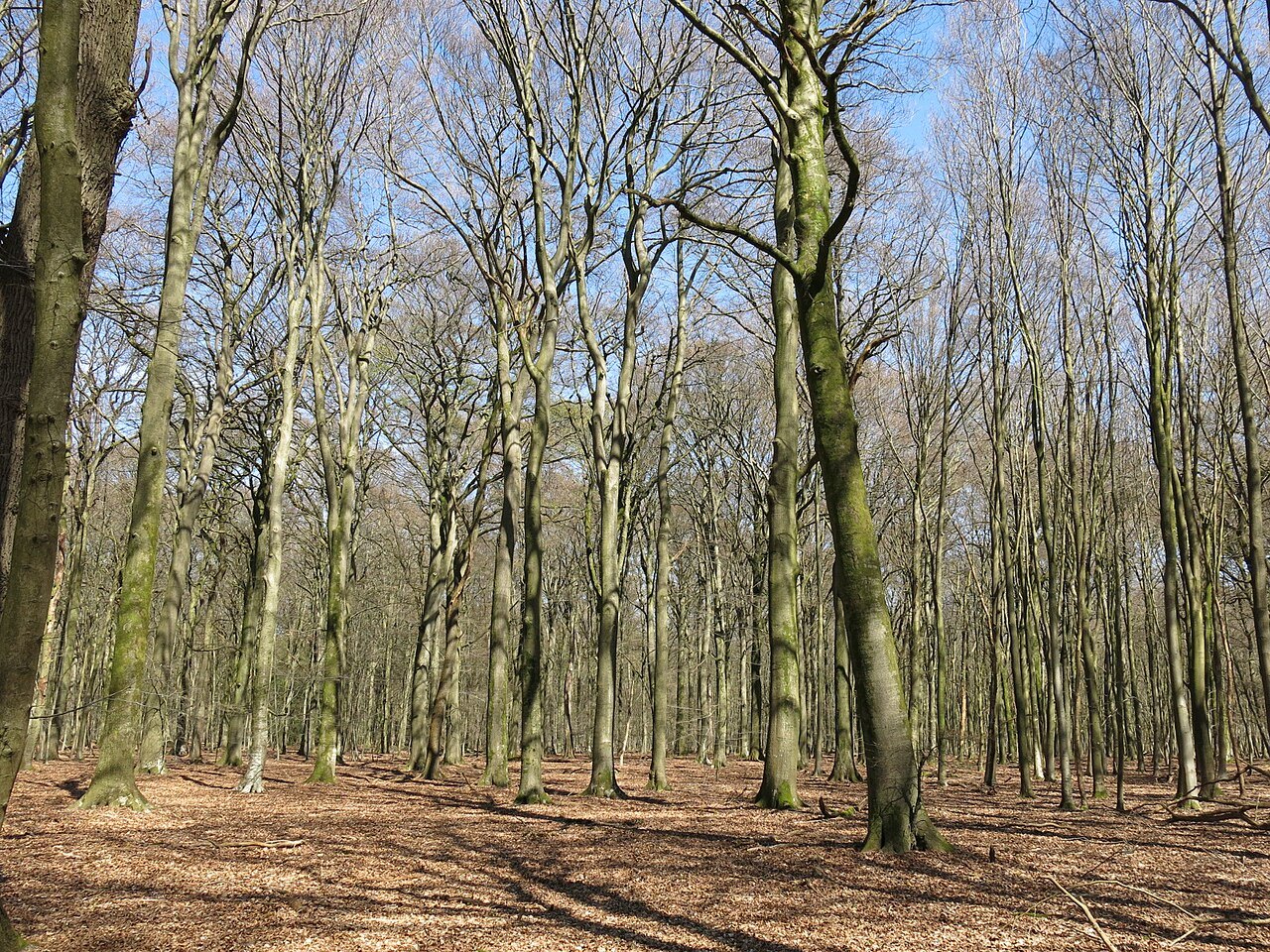

At Geldenberg in the Reichswald, woodland conservation is something that can be examined directly. The reserve contains older oak and beech stands as well as natural forest research plots. These terms describe different spatial and management contexts: a research plot is not simply another name for the whole Reichswald. When planning an outing, examine the intended walking route separately from the reserve boundary.
Woodland without a tidy appearance
Fallen timber, cavities in old trunks and dense young growth may seem surprising if you expect a park-like wood. They are visible structures, not evidence of neglect. From a path, you can observe how much light reaches the ground in different places and whether young trees are growing beneath it.
Choose two short sections for comparison: one beneath a closed canopy and another beside a visible opening. Compare brightness, ground vegetation and the height of young plants. This does not determine precise tree ages or automatically explain how the opening formed. It does show that a wood consists of more than evenly spaced individual trees.
Understand the research purpose
Wald und Holz NRW includes Geldenberg in its network of natural forest plots. Such areas allow woodland development to be studied without conventional forestry use. That does not create a right to cross the area away from paths. Observation from outside is useful precisely because it does not alter conditions within.
Ask which changes might be visible from the same position in ten years. Perhaps a fallen trunk, denser young growth or a canopy gap that has closed. A photograph with a broad composition preserves more information for that purpose than an isolated leaf detail. Leave fungi, bark and pieces of wood where they are.
Select a suitable woodland route
Check the starting point, surface and return connection instead of navigating only by the name Geldenberg. A map marker may indicate the centre of an area where there is no useful visitor entrance. Save an identifiable path junction together with the position of your starting point.
Postpone the visit during strong winds or thunderstorms. Forestry closures remain valid even when no machinery can be heard. Conditions after prolonged dry weather or rain may differ from those on a previous visit. If turning back becomes necessary, examining a short accessible stretch still makes a complete outing. The subject is the development of woodland structure, rather than reaching an arbitrary point inside the reserve. A few observations recorded accurately will remain useful long after an extra kilometre has been forgotten.