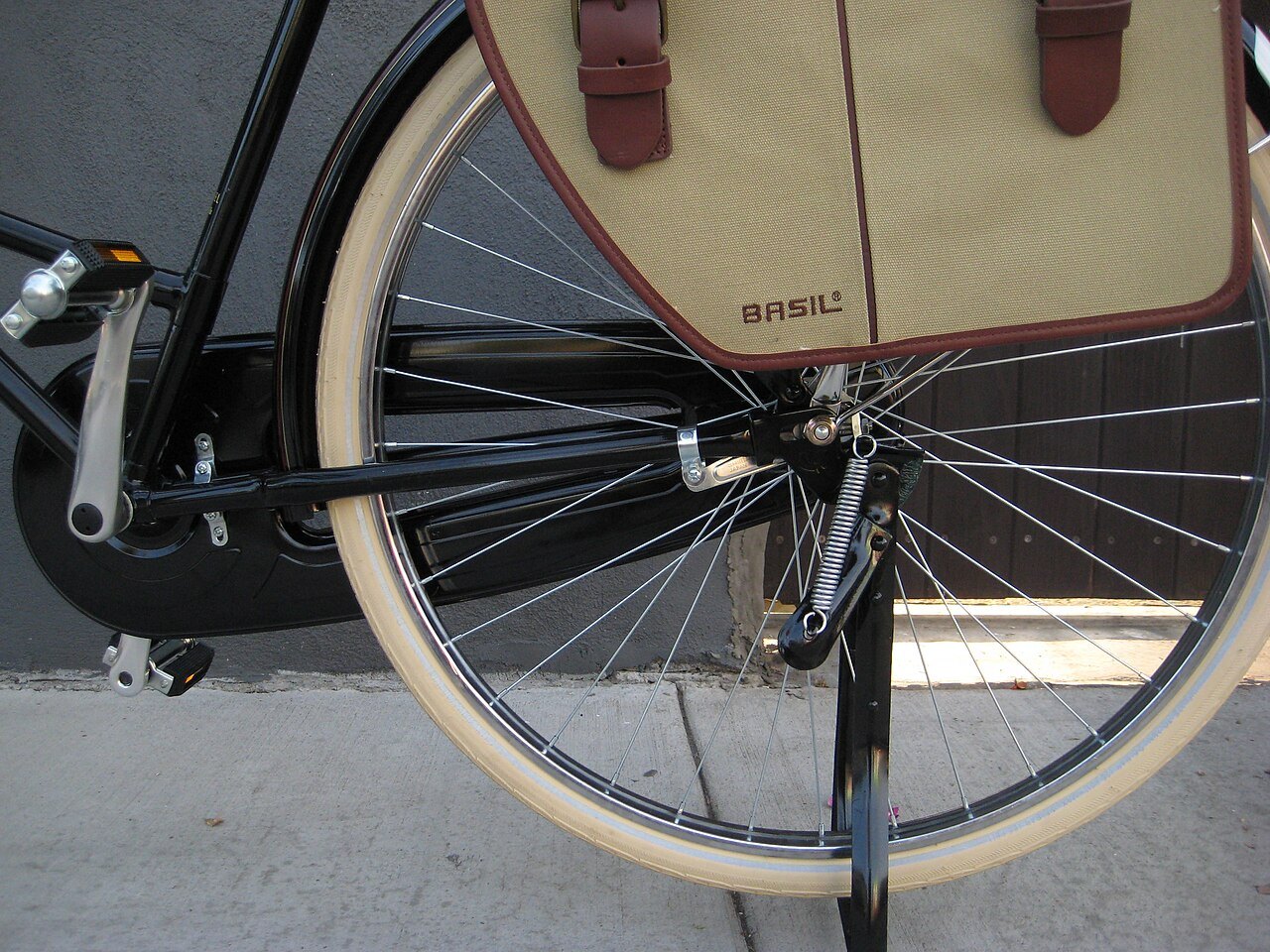

For a cycling day, luggage needs an arrangement that works while braking, pushing and stopping briefly. A stuffed bag can contain everything on paper while remaining awkward in use. Begin with the items actually needed and distribute them by weight and accessibility. Then assess the loaded bicycle rather than only the bags lying on the floor.
Secure heavier items low
Follow the load limits of the bicycle, rack and bag attachment system. Do not exceed the lowest applicable limit. With two panniers, distribute weight as evenly as practical. A heavy bottle on one side and only a jacket on the other can unnecessarily alter handling.
Check whether a heel touches the bag while pedalling. Handlebar luggage must not obstruct steering, brake lines or lights. Secure loose strap ends so that rough ground cannot shake them into a wheel. A brief stationary shake test may already reveal an attachment hook that has not engaged.
Pack by access needs
Put the rain jacket somewhere reachable without unpacking everything. Tools and a spare tube should remain easy to find even with food above them. Phone, money and documents can stay together in a small removable pouch so that a café stop does not require searching every bag.
Separate securely contained food and liquids from sensitive electronics. Another waterproof layer protects important items if a closure is incorrectly fastened or water enters during opening. The ADFC describes several bag formats; suitability also depends on whether the bicycle has a rack and how frequently you dismount.
Ride a short test while loaded
Before the main outing, ride for a few minutes in a safe area. Try slow turns, controlled braking and parking. If the front wheel lifts unusually easily while pushing, a bag swings or the bicycle pulls noticeably sideways, adjust the distribution. Do not wait for a narrow crossing to discover unfamiliar handling.
For a train or ferry, also decide which bags can be removed quickly. Total weight while lifting or pushing then matters alongside rideability. Remove an unnecessary heavy item rather than simply fitting a bigger bag. After the outing, record what was actually used. This gradually produces a personal packing arrangement suited to your bicycle and style of day trip. Keeping a small amount of spare space also makes it easier to repack a damp jacket without forcing the closure or hanging it loosely outside.