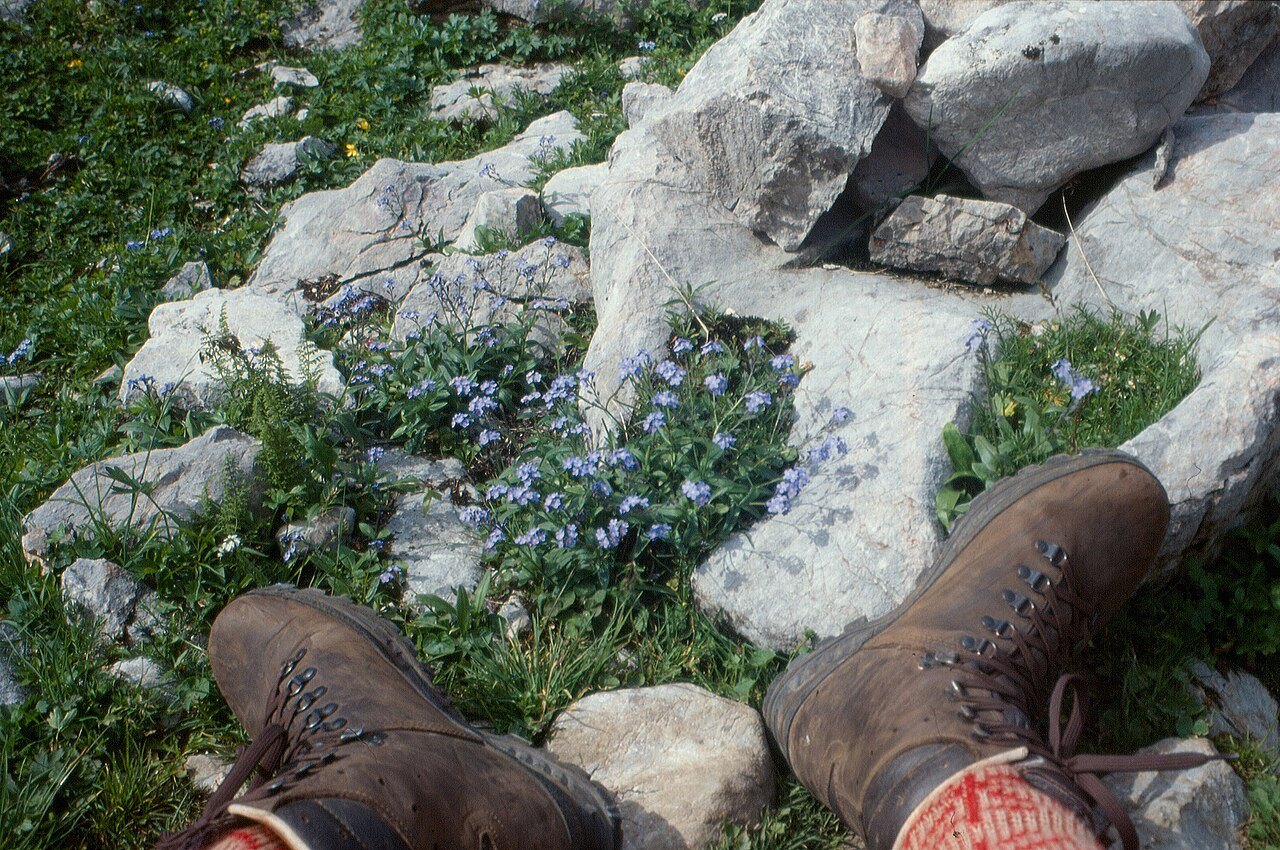
A Lower Rhine outing may move between smooth town paving, gravel, woodland paths and wet sections. Footwear should therefore suit the actual route and expected weather. A hiking label alone says little about comfortable fit or how a model feels on the chosen ground. Begin with the route rather than a universal equipment list.
Check three features of your own footwear
First examine the sole. Is the tread still distinct or heavily worn? Dirt can fill the spaces, so clean the footwear before checking. Tread does not, however, guarantee that you will not slip. Wet stone, leaves and uneven ground still require attention.
Second, check fit with the socks you intend to wear. The shoe should not slide noticeably or press uncomfortably during ordinary walking. Try a new pair on a short familiar route rather than first using it for a long day out. If it does not work, choose another option instead of hoping it will become comfortable during the trip.
Third, consider wet conditions and drying. Will the route mainly use surfaced paths or include prolonged damp sections? Manufacturer information can explain features but does not replace experience with the actual pair. Even footwear described as weather-resistant does not make crossing a flooded path a sensible plan.
The route can be adjusted to the equipment
If only light everyday shoes are available, a short surfaced town walk may be appropriate. There is no need to force a woodland section simply because it appeared in the original plan. Conversely, an easy circuit does not automatically require the heaviest equipment. Route, weather and personal comfort should work together.
Check children's footwear before starting too, and make room for a brief report during the walk. Discomfort is a reason to adjust the plan, not something to override with another destination. Bring dry socks if useful and keep them separate from damp belongings.
Afterwards, note which ground felt comfortable and where wetness or pressure occurred. Such experience is more useful than a general verdict on an entire footwear category. Use these observations when choosing the next route. A familiar pair and a suitable walk may be a better combination than new footwear whose behaviour you discover only during a long outing.