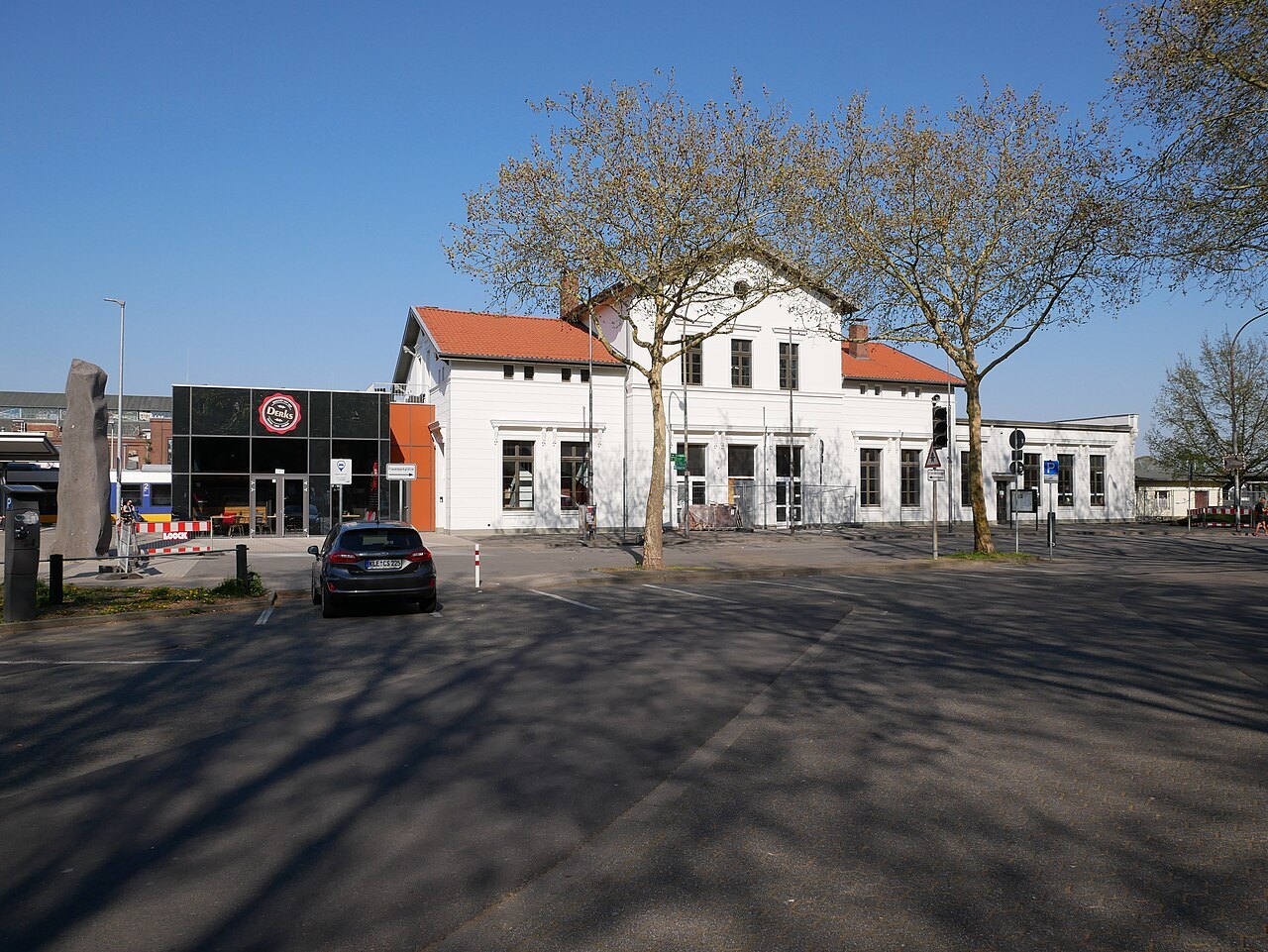

Kleve is at the end of the RE 10 line, the Niers-Express running via Krefeld to Düsseldorf Hauptbahnhof. The current RheinRuhrBahn operator page provides a starting point for planning. A line name alone, however, establishes neither the service on your chosen day nor whether engineering works affect it. Plan the whole journey to the entrance you need rather than only a train ride to a place name.
Search for the correct date
Enter your starting point, destination and travel date in a current planner. If you must arrive for a fixed appointment, search by arrival time rather than simply taking the earliest departure. Examine each leg afterwards. A fast connection may include a short interchange that does not suit your group.
Check whether the result shows the ordinary timetable or replacement transport already. Read the operator's additional service notices. An older downloaded timetable may help explain the general line but must not override current changes. Likewise, NordWestBahn appearing in an older description does not mean that today's RE 10 information should be sought under the former operator's name.
Comparing two connections makes the choice concrete. One may involve an additional interchange and a shorter overall time, while another has fewer changes and more margin. Consider what the group can comfortably manage: luggage, a pushchair and orientation may make simplicity more valuable than a few saved minutes. Also examine what happens after a missed connection. Is a later option confirmed, or would the remaining visit no longer work? Answer that before booking timed admission. The fastest result is useful information, but it need not determine the connection you choose.
Do not let the final section disappear
Reaching the station is not the same as reaching a museum or garden. Locate the actual entrance and decide whether to continue on foot or by bus. A map pin in the middle of a large site may suggest a different approach from the intended visitor entrance.
For a group with a pushchair or mobility requirements, the transition between platform, station exit and onward transport also matters. Ask about available access and current restrictions where necessary. A general property of the train service does not describe every interchange structure.
Allow a pause to orient yourselves. After leaving the train, people may need toilets, coats or time to identify the correct side of a road. Do not silently count all of this as zero minutes. A less tightly timed appointment prevents the outing from beginning with a rush at the station.
Save the return as a second plan
Search the return separately for the same date. Check a preferred connection and a later alternative if available. The last useful journey is not always the final departure from Kleve: a subsequent interchange may determine your real deadline. Avoid a plan that works only with one particular service.
Save the important details so they remain readable with poor reception: lines, interchange points, times and the route back to the station. Check live conditions again before actually returning. A saved view supports orientation but does not establish that no disruption has occurred since it was created.
Do not equate a journey result with a ticket
Check whether an existing or purchased ticket covers every planned section. A journey planner may combine modes without validating every traveller's particular ticket. Ask the responsible operator directly about additional passengers, items carried or onward cross-border travel. Keep required evidence accessible. If the arrangements remain unclear, simplify the connection or obtain an explanation beforehand rather than making the decision while boarding.