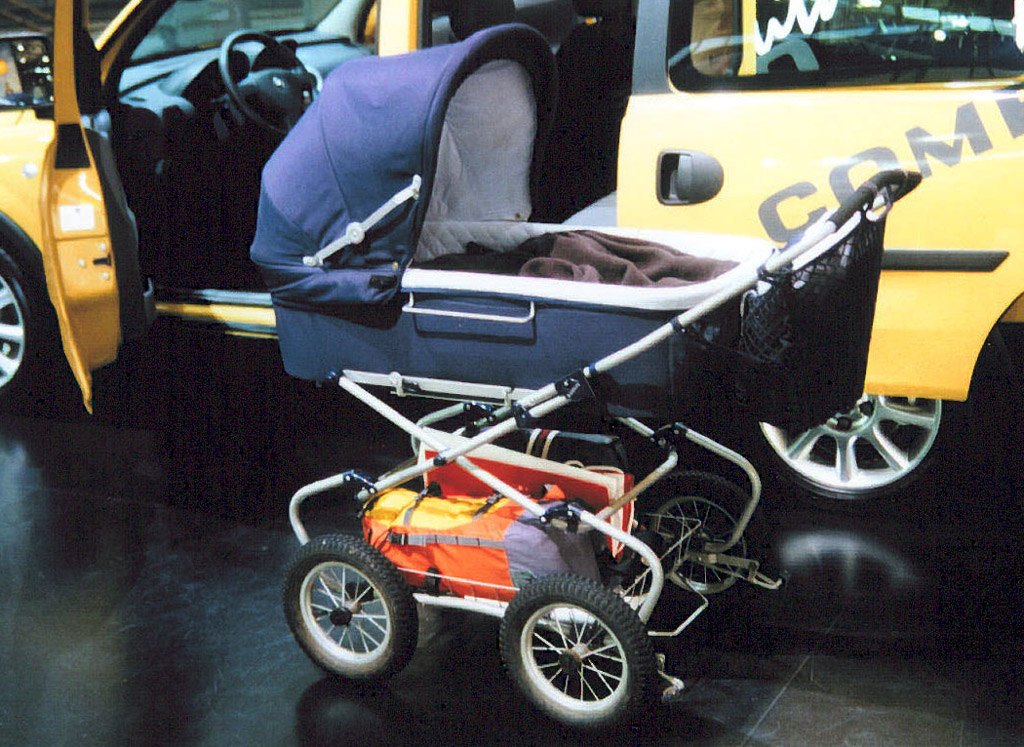

A family-friendly label does not establish whether a route works well with your pushchair. Width, surface, slopes and individual narrow points can matter more than overall length. Check the journey as a sequence: arrival, access, the visit itself, a break and the return. One staircase at the end can change an otherwise comfortable plan.
Describe the surface precisely
Do not ask only whether a path is surfaced. Smooth asphalt, rough paving and compacted gravel behave differently. Rain may soften a previously firm section, while leaves conceal unevenness. Wheel size and construction affect how your particular pushchair handles it. A general recommendation from another visit is therefore only a starting point.
Check transitions as well. Kerbs, narrow passages, turnstiles or gates may interrupt a route. A photograph of a broad main path may omit them. Ask the operator about the entrance you intend to use rather than requesting a general judgement about the entire site.
Consider gradients together with the return
A downhill outward section becomes uphill on the way back. Do not judge the route only by its first easy stretch. For a circuit, establish whether the second half has comparable conditions. If that remains unclear, a short out-and-back walk on known ground may be preferable.
Avoid a plan that assumes carrying an occupied pushchair over an unverified staircase is an ordinary solution. Find a confirmed alternative entrance or choose another visiting area. A lift may help, but it must actually be available that day; ask about an alternative if using it is essential.
An example of a specific enquiry
Rather than asking whether Xanten Archaeological Park works with a pushchair, name a particular entrance and the area you plan to visit. Ask whether that connection includes steps, coarse gravel or temporarily closed sections. Official access information provides a starting point, but information for wheelchairs or walking frames is not automatically a complete description for every pushchair.
Add the things your group actually needs: room for a break, suitable toilets or permitted parking for the pushchair if an interior is visited without it. Do not confuse access information with a promise of childcare or storage. Those services would need to be explicitly offered.
Begin with a short check on arrival
After arriving, examine the first transition and current signs before setting off. If conditions differ from the information you received, clarify this before the group moves far into the site. Keep necessary items accessible and load the pushchair according to its manufacturer's guidance rather than hanging every available bag from it.
A shorter circuit may preserve the visit without requiring the child or accompanying adults to negotiate the hardest section. Remember the route that works for returning. Afterwards, a specific note is more useful than a general suitable rating: record the entrance, surface and limitation actually encountered. This makes the next plan more precise and helps avoid treating one successful visit as a guarantee for every route on the same site.