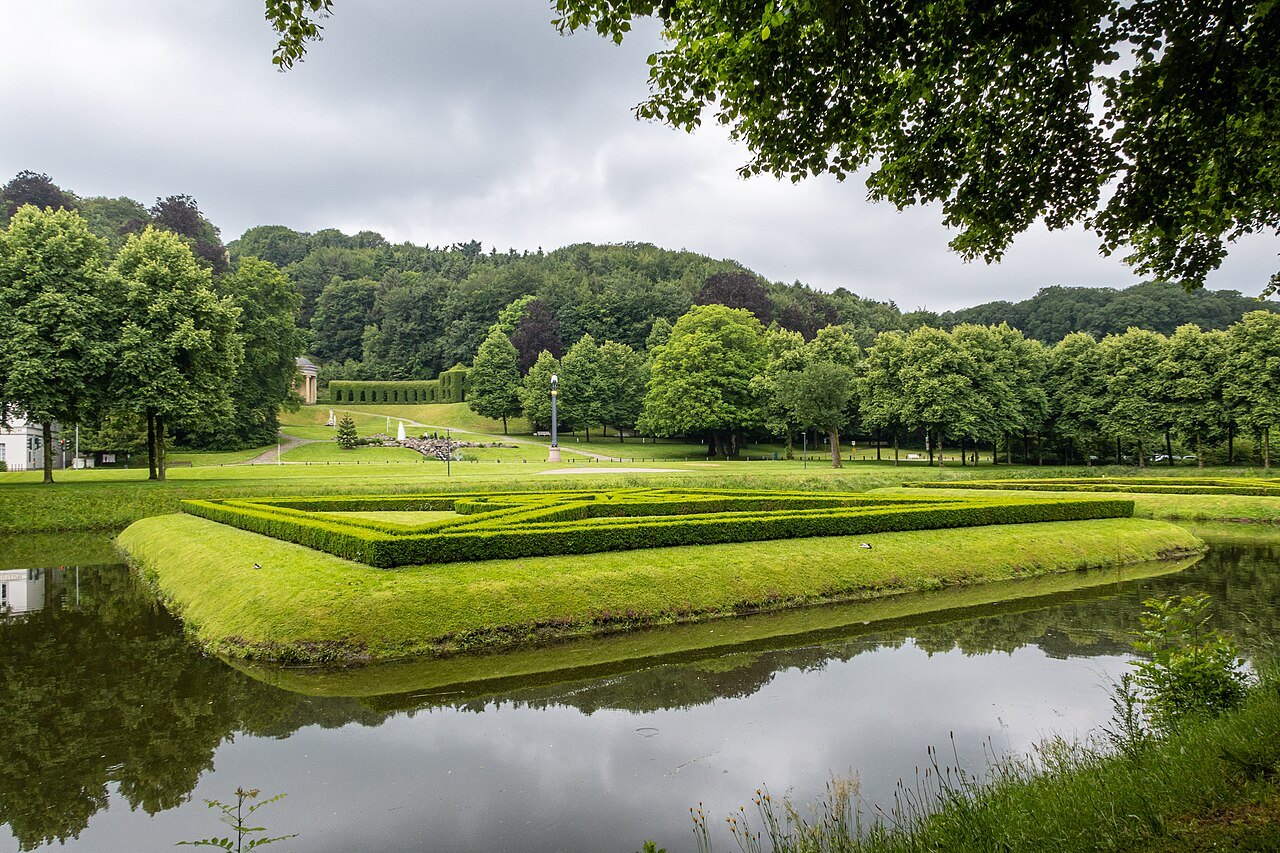

A spring outing is easily judged against one image: flowering trees, full beds or a particular colour. Actual development depends on weather and the plants at the site. Do not therefore plan a garden visit as a guarantee of one picture. Permanent design and small seasonal changes offer plenty to notice even when flowering starts later than hoped.
See the garden's framework
In Kleve's gardens, paths, terraces and viewing directions can provide the starting point. Find an alignment that remains understandable without flowers. How do trees organise space, where does a view open, and what role does water play? These questions depend less on a brief flowering period than a narrowly chosen photographic subject.
Then move from the large space to one plant visible from the path. Can you see buds, young leaves or flowers already? Describe its current condition without predicting precisely how it will develop over the next few days. A dated photograph can support a useful comparison on a later visit.
With children, look for different shades of green or leaf shapes. Nothing needs to be picked. Stay outside beds and avoid moving branches to improve a photograph. A small observation is more valuable than an image achieved by interfering with the planting.
Interpret current pictures carefully
When looking for pictures beforehand, check their date and location. An image from an earlier year does not show present conditions. Even recent photographs may feature only one especially advanced area. Use information from the garden operator where available, while still allowing for variation.
Choose a destination that interests you without the hoped-for flowering scene. Perhaps you want to see a sequence of spaces, take a quiet walk or compare two garden areas. Weather can then change the visit without removing its whole purpose.
Afterwards, make a brief note of what you actually saw. Instead of judging the visit as too early or too late, record which plants already carried leaves and which views were especially clear. Spring becomes a process of development rather than one supposedly correct date that must be caught.