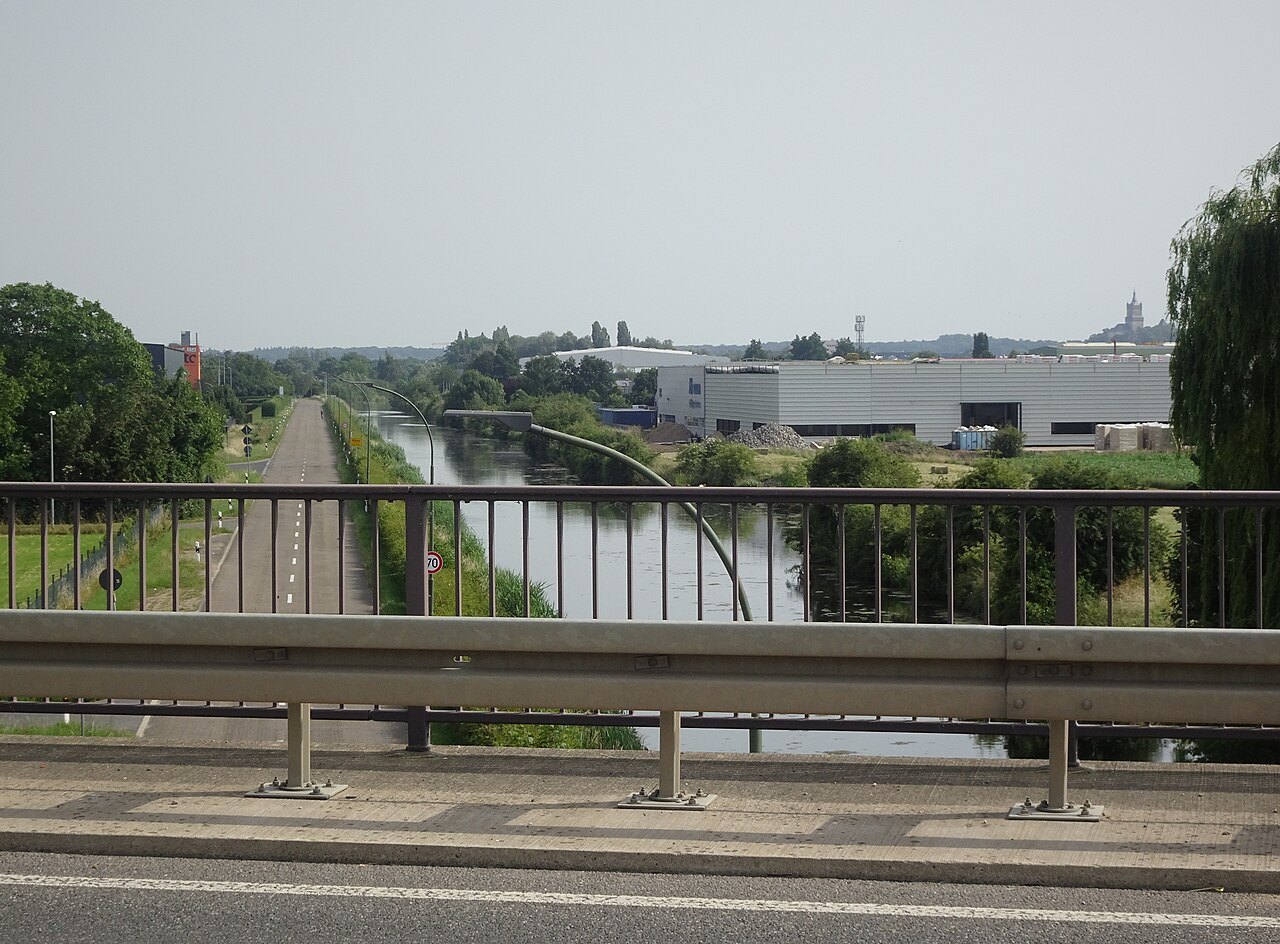

At the Spoy Canal, water and town meet within a compact space. Stopping at the Opschlag offers more than a photograph with reflections. Its name recalls the former handling of goods. Kleve's official walking brochure explains the canal as the town's connection to the Rhine and remembers supply vessels serving the food industry. This history changes how you see a place now often experienced mainly as somewhere to spend time.
Think from the goods-handling place
Start with the practical task: goods had to move between boats and the town. That required accessible banks and connections into the street network. Look for those relationships today without assuming every existing edge is an original historic feature. Urban rebuilding can alter the appearance considerably while retaining the basic relationship between water and routes.
The tourism account traces the canal's creation to the fifteenth century under Duke Adolf I. Such a long period of use implies many changes. Asking what happened here is therefore more productive than expecting to recover one complete historical state. A current view and a properly captioned older picture can complement each other.
Read a short stretch carefully
Choose a safely accessible section and observe how people use it now. Do they follow the water, cross sides at a bridge or pause at a particular point? Path widths and connections often explain more about everyday life than the water surface alone. Leave room for people to pass when you stop.
For a photographic comparison, emphasise the water's length in one picture and the connections crossing it in another. The first shows extension, the second linkage. Notice the direction towards the town too: a scene that initially seems purely waterside can acquire a strongly urban frame after only a few steps.
Keep Spoy and Kermisdahl distinct
The official town route continues from the Opschlag towards the Kermisdahl. The two water areas can be combined in a visit, but their names are not interchangeable. Use a map and decide at which bridge you will cross or turn back. Do not assume there is an uninterrupted promenade when the public route takes another course.
A short canal visit works without a boat trip. If you want a seasonal water activity, check its own operating and booking arrangements. The historical transport role remains a tangible subject either way: water connected Kleve with other places before it became the subject of a town stroll.