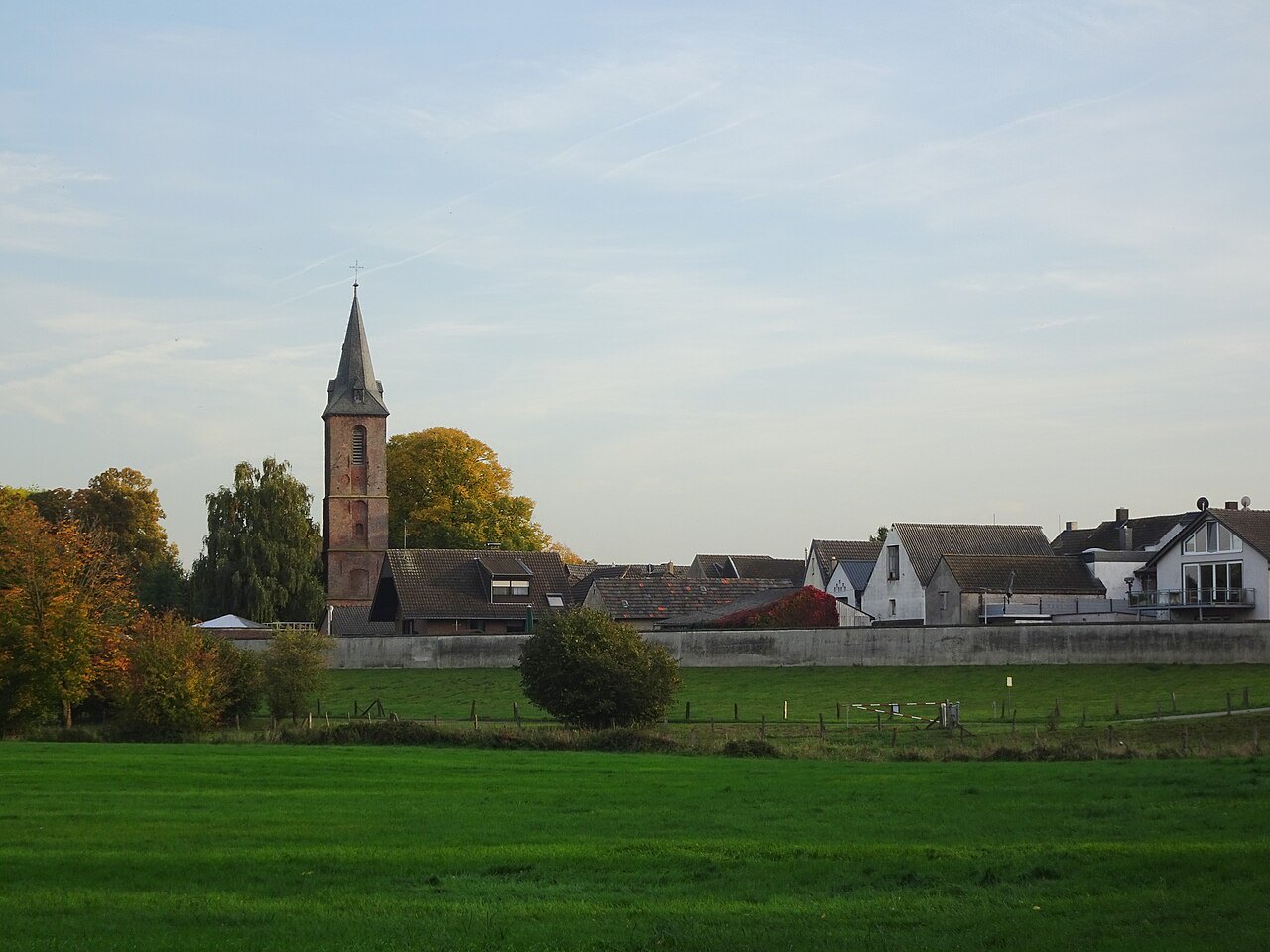

Schenkenschanz looks small on a map, but its setting has a much wider history. Between the Rhine and an old Rhine arm, the relationship between settlement and water is particularly apparent. A visit should therefore involve more than looking for attractive houses. The more revealing question is why such a compact place developed here and why its boundaries remain so noticeable.
A strategic position changes
The local heritage association explains that the fortress arose where the Rhine and Waal then separated. This made Schenkenschanz militarily important and repeatedly exposed it to conflict. As the Rhine changed its course, the fortress gradually lost its former strategic significance. Today's river map is therefore not an unchanged plan of those earlier struggles.
When looking at historical images, identify the waterways first. Then compare the settlement's position rather than individual present-day houses. This reveals more than assuming that every standing wall belongs directly to the original fortress. The place has passed through several phases of use and rebuilding.
The boundary with water is constructed
A municipal study describes Schenkenschanz as a compact settlement protected by a flood wall and dyke. These structures have a working purpose. They are not merely photographic backgrounds and should not be treated as freely accessible viewing furniture. Respect gates, operational areas and signs, even when water seems far away during your visit.
From an authorised path, notice the contrast between the confined streets and the open lowlands. It makes the village's position easier to grasp. At high water or when restrictions are announced, check local information before travelling. An excursion should not depend on a familiar approach remaining available under every condition.
A village is still a place to live
Walk slowly along public streets and keep entrances clear. At this small scale, groups, conversations and cameras quickly become noticeable to residents. A heritage-association tour may explain more, but it depends on the dates and booking arrangements offered rather than an expectation of a programme available at any moment.
If a ferry forms part of your plan, check the current operator's timetable and an alternative route. A historical ferry connection is not evidence of daily service. For a short visit, the village and one deliberately chosen landscape view are enough. The central discovery is the interaction between a changing river, a defended settlement and life in the present.