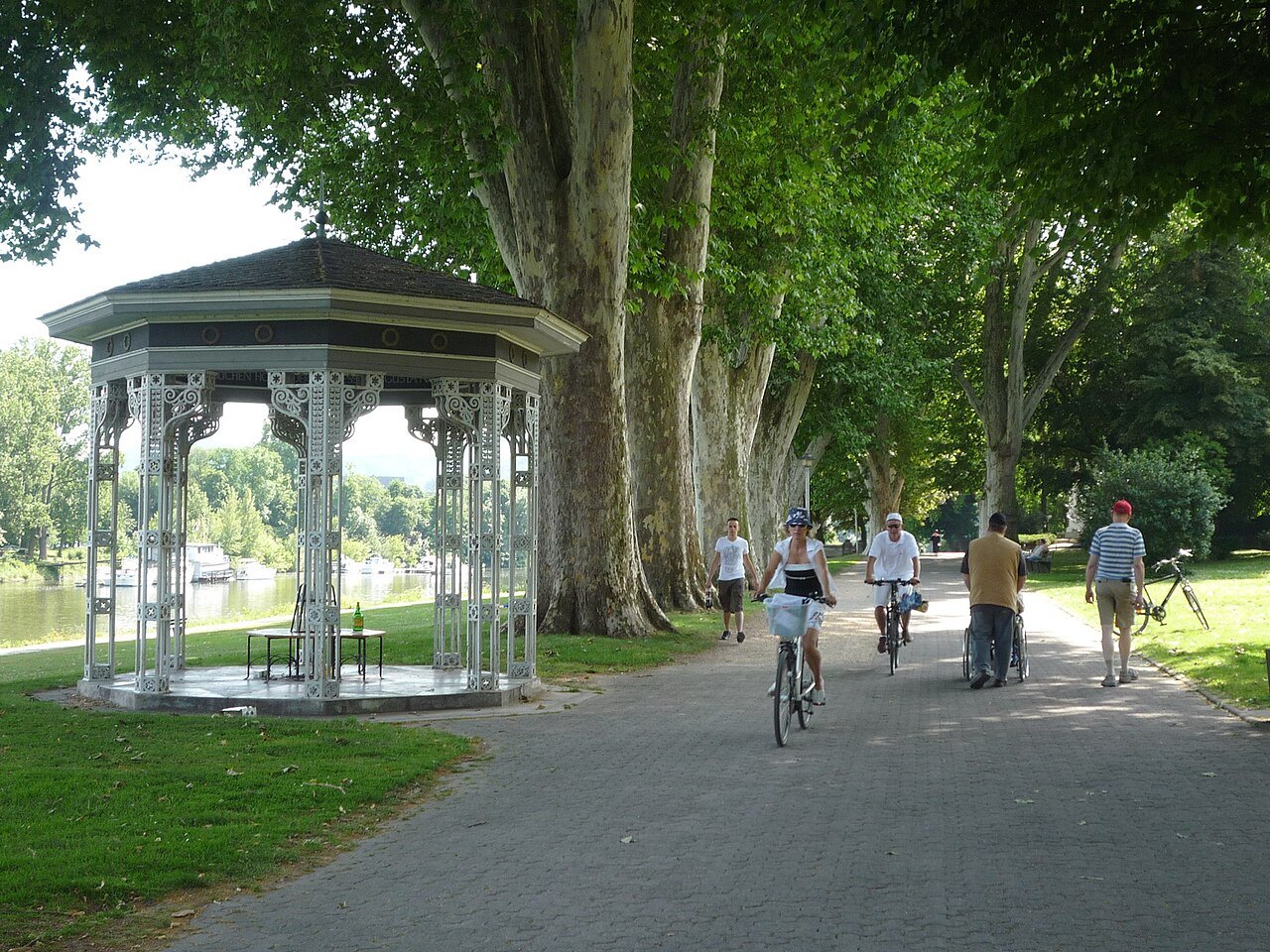

The Rhine Cycle Route forms part of EuroVelo 15, a connection extending far beyond the Lower Rhine. A single cycling day need not become a long-distance expedition. Select a section with sensible access and an achievable finish. The key question is not where the entire route leads, but how your own stage, including the return, actually works.
Establish the bank first
EuroVelo describes routes on both sides of the Rhine in North Rhine-Westphalia. Two places may look close on a map yet require a lengthy ride to a suitable crossing. Mark which bank contains the start and finish before comparing distances.
If changing sides, check the specific bridge or ferry. Not every road connection is appropriate for bicycles, and ferries have operating conditions of their own. A route with two crossings contains two dependencies. For an introductory outing, staying on one bank or using a clear outward-and-return route is often easier to assess.
Treat the track as information
EuroVelo provides official GPX files while noting that currency and local conditions still need checking. A downloaded alignment does not guarantee that a section will be open on the day. Works, water and temporary diversions can require changes.
Examine the track on a map beforehand, especially the approach to and departure from the endpoints. A hotel, station or parking place can lie several kilometres from the actual Rhine route. These access sections affect distance and may also change traffic conditions and the attention required.
Include wind and stops in the calculation
A flat route can become slow into a headwind. Use a cautious personal daily pace including brief stops. Photographing every attractive river view may barely change your moving speed but substantially extend the total day.
For an illustrative calculation, a chosen 40-kilometre stage at 13 kilometres per hour needs just over three hours of riding. Meals, orientation and longer visits come on top. If a fixed departure awaits at 17:00, work backwards from the necessary arrival at the station to allocate these blocks. A small time margin does not compensate for a missing return connection.
Prepare an earlier finish
Identify a place where the ride can be shortened. Confirm that the proposed transport actually carries bicycles and whether another approach to the stop is needed. A dot beside a railway line is not a complete fallback plan.
On a circuit, an early shortcut is particularly useful. Decide there according to remaining energy and weather, rather than a desire to reach the planned number on a display. The Rhine can remain the thread connecting a shorter day's ride. A clear finish with sufficient reserve makes the next outing easier to plan than riding the maximum possible distance to exhaustion. Record the useful stopping points and any awkward access sections afterwards; those details are more transferable than an unusually fast time achieved with a following wind.