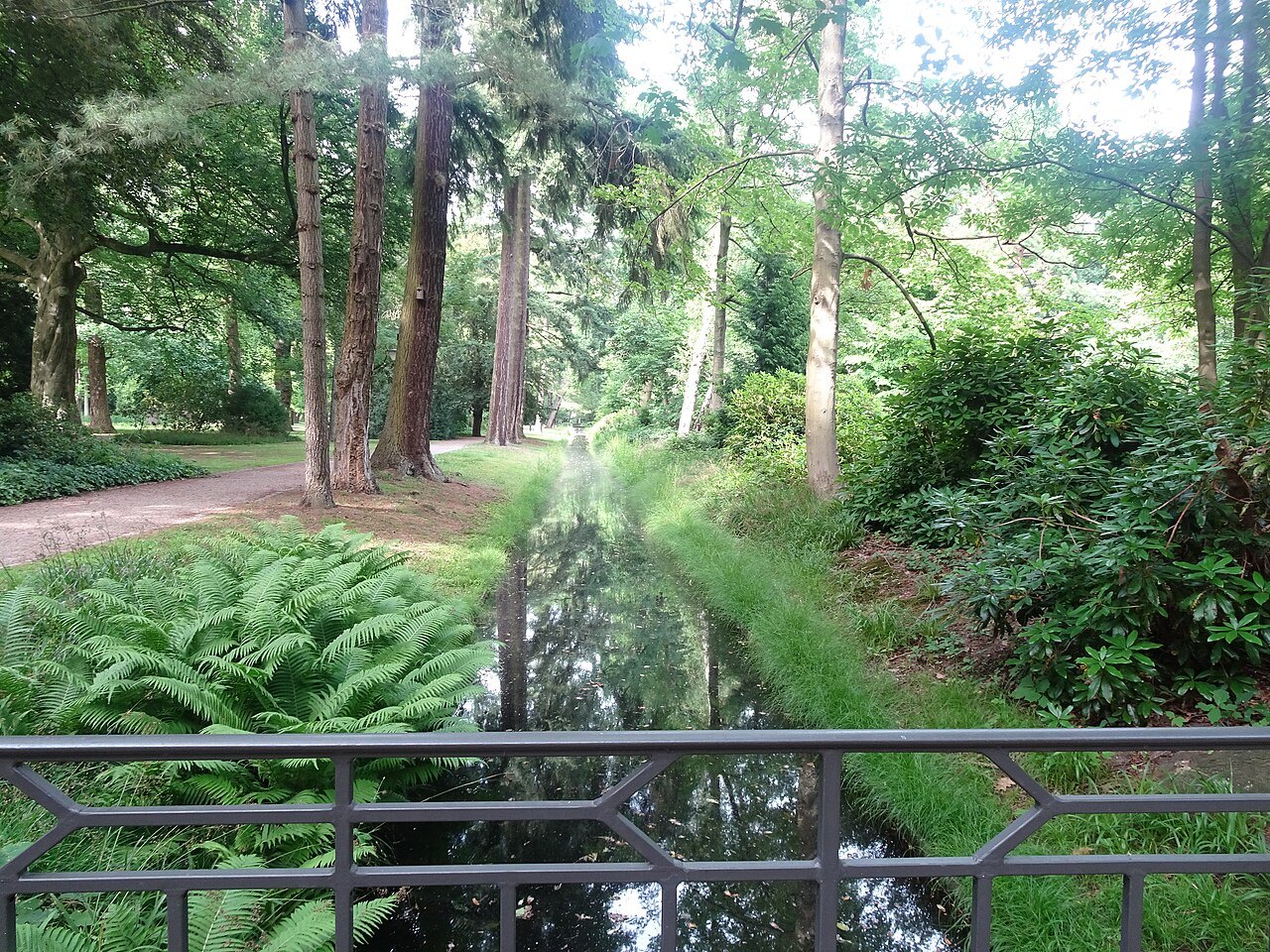

In the Forstgarten, it is worth looking differently than on an ordinary route through a park. Trees are more than a green backdrop. Their crowns, spacing and contrasting growth forms determine how open or enclosed an area feels. A short visit can therefore begin with a simple task: find two distinctly different trees and consider what each does to the space around it.
Collection and landscape together
The official garden account traces the grounds to 1782. Unusual or non-native woody plants were an important part of the original planting. During the 1820s, Maximilian Friedrich Weyhe gave the garden a landscape-style character. These two ideas are useful today: individual plants can be botanically interesting while their arrangement also creates a larger space.
Do not mistake a historical species total for a current inventory. Trees age, are replaced or sometimes have to be removed for safety. If you want to find a particular species, use current labels and ask for information where necessary. An old garden guide cannot reliably tell you which individual tree still survives.
From leaf to crown
Start with the outline. Is the crown broad, narrow, loose or dense? Then move closer without entering planted areas and compare bark and leaves. You can examine a fallen leaf without breaking off a branch. If a tree has a label, read it after making your own description, so that observation does not stop at learning a name.
Now change your distance. Up close, a large tree may draw your eyes upwards; farther away, it can appear to close the end of a lawn. These two roles are compatible. For a small sketch, recording the trunk, crown outline and empty area beside it is enough. That can communicate more than a crowded close-up of many leaves.
Walk without turning it into a test
With children, one person can describe a tree through a few features for the others to identify. Agree on a small area and stay together. The aim is to look carefully, not to collect as many Latin names as possible.
The season changes what you notice. Branch patterns become clearer in winter, areas of shade in summer, and colour differences in autumn. Returning to the same stretch later in the year can be a visit in its own right. You do not need to combine the Forstgarten with every neighbouring attraction: one slowly observed section can show how collecting plants, maintaining them and shaping a landscape come together.