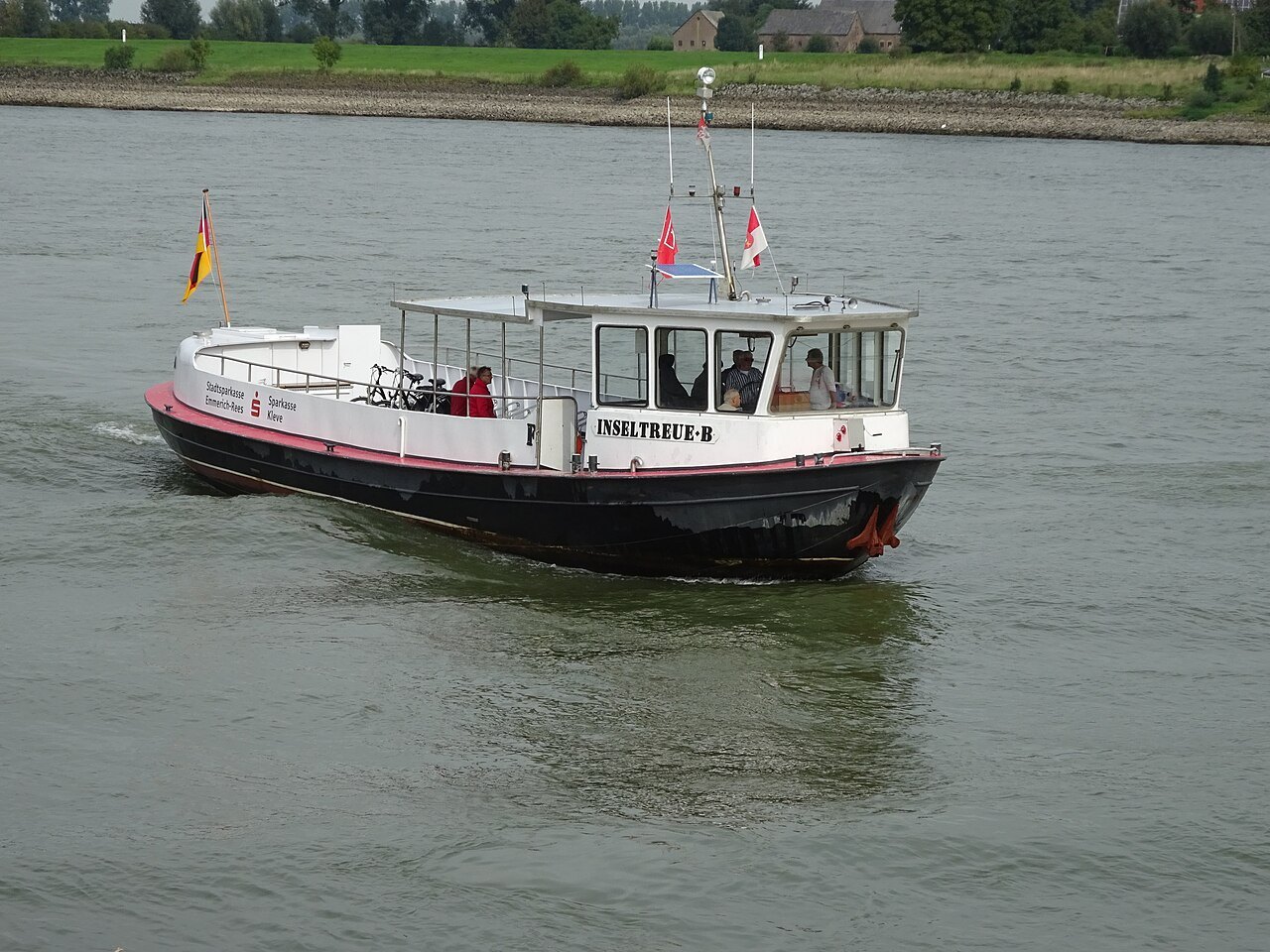

A cycle outing with a ferry contains a distinctive transition: leave the path, cross the water and continue on the other bank. That transition is also a dependency. A ferry line on a map does not establish whether the service runs on your chosen day. Plan the crossing as a checked component rather than a permanently available bridge.
Identify the specific ferry
Record both landing places and the operator's name. The Lower Rhine has different crossings over the Rhine and old channels. Similar place names and general search results can lead to another service than the one intended by a route suggestion. Check the operator's season, operating days, final sailing and current notices.
A concrete example shows why notices matter: when checked in October 2026, Fährbetrieb Heinz Hell listed Rees–Reeserschanz as out of service while still listing Grieth–Grietherort. A general seasonal statement alone would not adequately explain that distinction. Check the current situation again for your visit; this snapshot is not a permanent timetable.
Do not aim for the last crossing
Arriving at the landing does not guarantee immediate carriage. A group may need to wait, and the final sailing can precede the end of a broadly advertised operating period. Allow several possible departures before closing where the service pattern permits. Arriving at the last moment leaves little flexibility.
Calculate travel to the ferry using the slowest realistic group pace. Include meals and town visits before it in the schedule. If arrival becomes tight, omit an optional stop. Riding faster on unsuitable connections is not a sensible answer to an overcompressed plan.
Calculate the fallback rather than merely naming it
“We will use the next bridge” becomes a plan only once distance, bicycle access and remaining time have been checked. The bridge may be distant or require another approach. Save the alternative and add its kilometres to the distance already ridden. Establish whether everyone can manage that extension.
Another arrangement places the ferry early in the ride. If it is unavailable, switch to a circuit on the original bank. You remain near the starting point instead of finishing the day on the wrong side. The better option depends on access and the locations of your intended destinations.
Handle bicycle and luggage on the ramp
Follow staff instructions while waiting and boarding. Push when instructed and leave room for others. Ramps may differ from photographs according to water level and weather. Keep control of the bicycle and watch for loose bags or straps.
Confirm carriage separately for trailers, cargo bikes, tandems or particularly heavy e-bikes. Calling a service a bicycle ferry does not confirm every vehicle type or unlimited capacity. Ask about arrangements if someone cannot safely push their loaded bicycle alone.
Reorient after crossing
Do not immediately follow the first cycle path. Check the direction to the next planned place and confirm that the whole group has arrived. A brief stop away from the ramp prevents competing navigation ideas emerging several kilometres later. The ferry can then remain an enjoyable part of the day, while time reserves and alternatives keep the return independent of one particular sailing. Retain the operator's contact information offline as well, so that an uncertain notice can be checked without searching through old route descriptions.