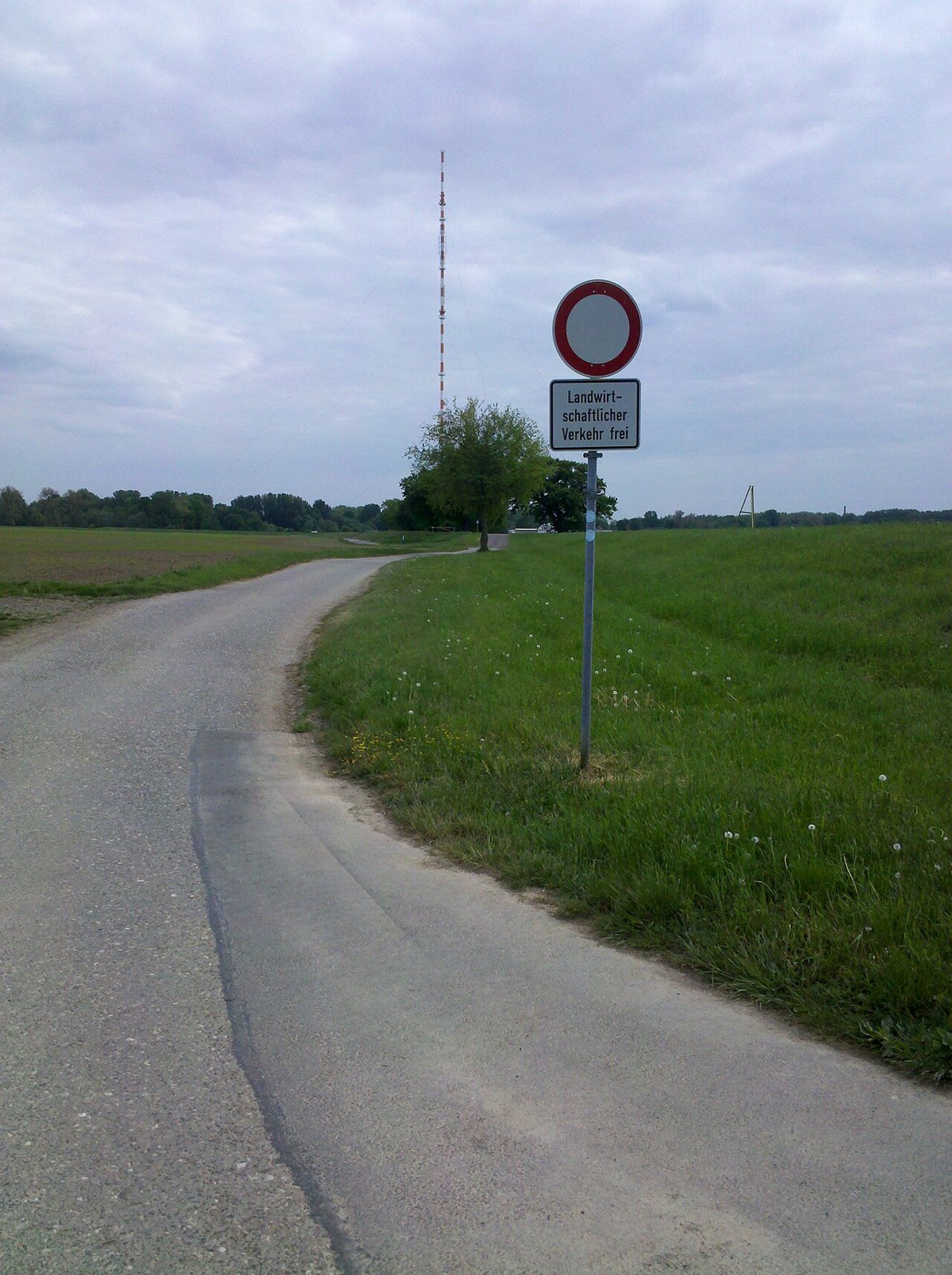
A level dyke path is not automatically an easy cycling route. Without shelter from buildings or trees, a headwind can substantially reduce speed, while crosswind gusts demand attention. Elevation figures alone are therefore insufficient on the Lower Rhine. Check weather developments across the whole planned period and consider wind and gusts explicitly.
Choose the direction deliberately
With a stable forecast, it can make sense to ride the harder headwind section early and arrange a more favourable return. This is a planning option, not a guarantee: wind can change direction or strengthen. A circuit that works only with an unchanged following wind home has too little reserve.
Compare your intended direction with the wind information and read the explanation of the weather display. Arrows in applications are not always intuitively understood. If the direction the wind comes from remains unclear, check the legend rather than basing the whole ride on a guess.
Do not defend a target speed
Change to an easier gear early into a headwind and allow speed to fall. A desired average is no reason to use up energy during the first half. On an e-bike, increasing assistance should be accompanied by watching consumption. Motor support changes the effort but removes neither wind nor battery limits.
If the anticipated hour to a turning point becomes substantially longer, the return schedule changes too. Shorten at the next suitable, previously checked connection. Do not assume a fast homeward leg will automatically recover all lost time. Breaks, crossings and other delays still exist.
Retain control and spacing in gusts
Slow down if holding a steady line becomes difficult. Keep both hands on the handlebar and adequate space from other people. Wind can become suddenly more noticeable when leaving a sheltered section. Stop somewhere suitable for photographs or clothing adjustments.
If you can no longer control the bicycle reliably, continuing is not a matter of training harder. Interrupt or finish the ride by a safe route. Moving into woodland is not a universally safe answer during a storm because branches and trees can become hazardous. Warnings and actual conditions take precedence over the planned dyke circuit. On an ordinarily windy day, a shorter connection with an accessible sheltered stopping place may be enough; in dangerous weather, postpone the outing. Afterwards, record which part was exposed so that future distance estimates include the effect of terrain and shelter as well as gradients.