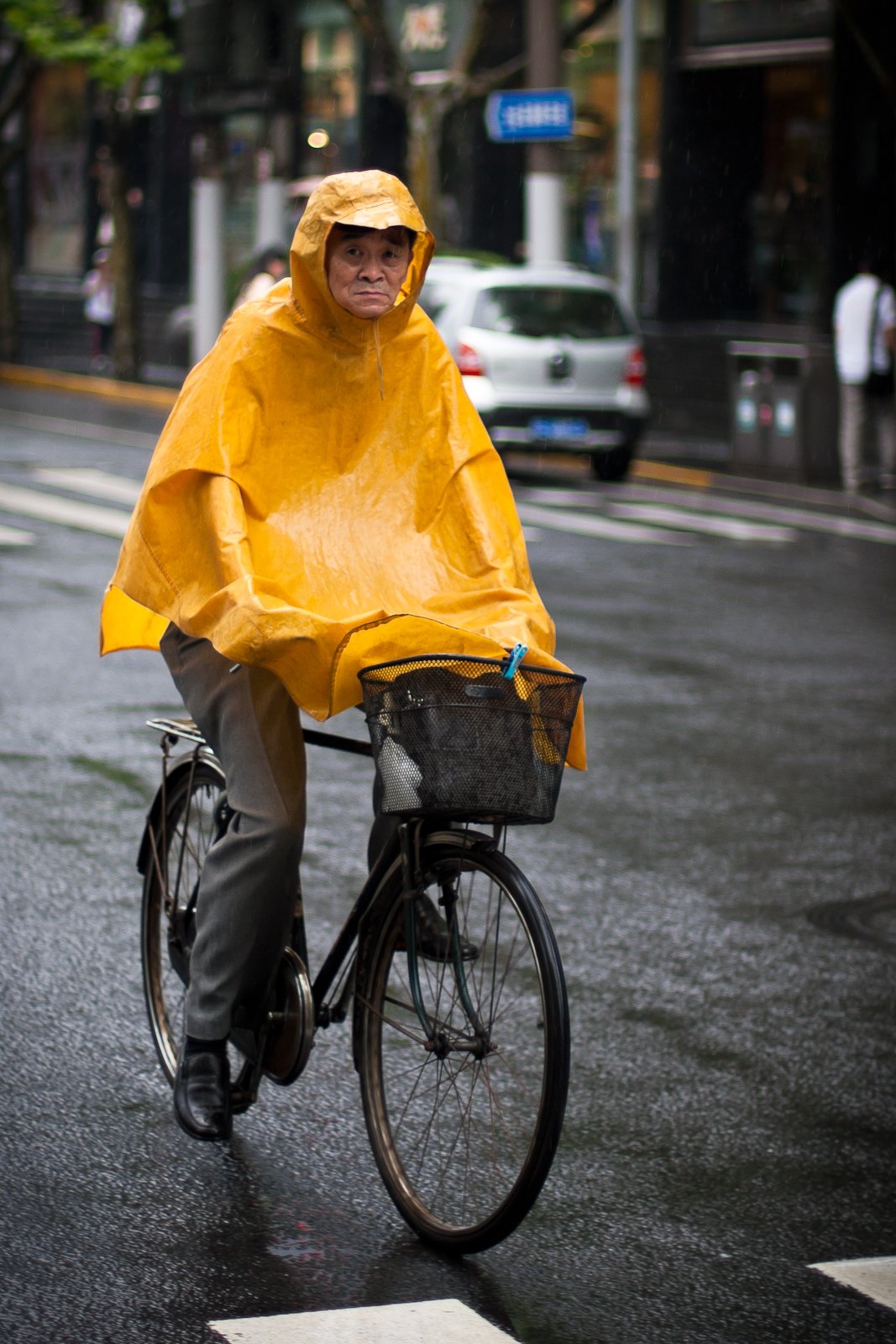

Changeable weather requires more than a jacket buried in luggage. The important question is whether you can respond in time: put protection on before becoming wet underneath, reach a suitable stop and shorten the circuit if needed. On the exposed Lower Rhine, wind and rain together can be less comfortable than a brief shower in a sheltered street.
Test clothing in the riding position
A rain jacket should provide coverage when leaning forward and allow movement at shoulders and arms. At home, check whether the hood restricts sideways vision or sleeves interfere with brake operation. Secure loose cords. Clothing that fits while standing can behave differently on a bicycle.
The ADFC recommends adaptable touring clothing and wind protection. Layers help because effort while pedalling differs from cooling during a break. Adjust ventilation early. If heavy sweating makes you wet from inside, a waterproof outer layer alone does not solve the problem.
Keep wet and dry items separate
Put a dry additional layer in its own waterproof bag. Keep the rain jacket on top or in a readily accessible compartment. Having to empty several bags at the first drops encourages postponing the stop unnecessarily. Give a phone, documents and spare clothing separate moisture protection even when the main bag is described as weatherproof.
After a shower, do not place wet clothing directly beside the dry reserve. A separate bag prevents the only warm layer becoming damp before the next pause. When refitting luggage, check that no straps can reach a tyre or the chain.
Adapt the route to rain
Wet markings, leaves and smooth surfaces call for calmer steering and braking. Slow down before unclear sections and leave more space. A familiar gravel path can become softer after rain; assess an alternative for suitability instead of choosing it solely by shortest distance.
Identify somewhere the circuit can be ended or shortened without a major detour. With thunderstorm or storm warnings, postpone the outing or interrupt it early at a suitable safe place. A lone tree or arbitrary open shelter is not a reliable protection plan. Check weather developments during longer pauses too. Decisions then follow actual conditions rather than determination to complete a prepared circuit regardless. A shorter dry return can preserve the enjoyment of the day more effectively than continuing until both clothing and attention are exhausted.