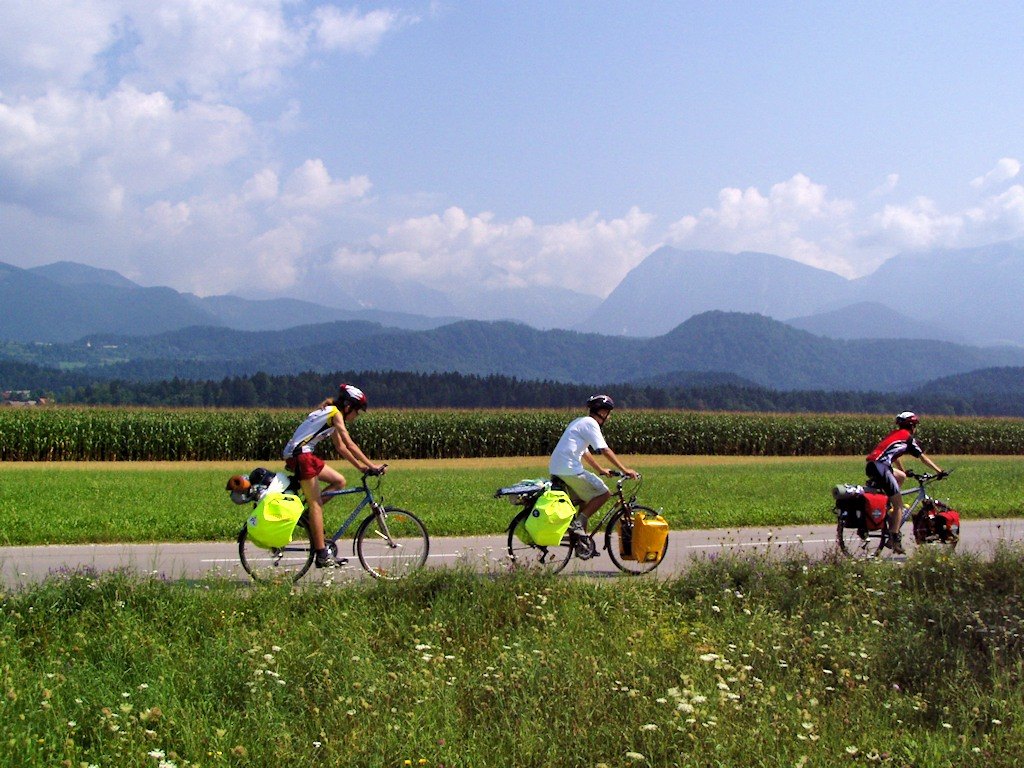

A bicycle makes landscape changes easy to reach while allowing flexible stops at suitable places. That advantage disappears when photographs are continually taken while riding. Separate movement from photography deliberately. A photography outing needs less distance than a ride focused on continuous movement because searching, parking and restarting all take time.
Choose the stop before the subject
An attractive view is not always beside a safe stopping place. Continue a little farther if necessary until you can stand outside the riding line. A bridge, narrow bend or descending ramp is unsuitable for sudden braking. Announce a stop early when riding with others.
Park the bicycle securely and lock it where appropriate before unpacking the camera. Consider wind and the possibility of a stand sinking into soft ground. A falling loaded bicycle can strike people or equipment. The photography position must also be publicly accessible or explicitly permitted.
Build a photograph from three questions
First ask what explains the subject: a dyke's shape, a tree line beside a ditch or the transition between settlement and field. Then choose foreground that makes the viewing position understandable. Only afterwards decide whether a tighter crop reveals more or merely removes context.
A small assignment can consist of one wide landscape, one medium view and one detail. They need not be made at the same place. The limit encourages deliberate selection rather than stopping at length for every similar view. Observe animals from an appropriate distance without approaching or feeding them for a photograph.
Transport the camera appropriately
Its bag should be securely attached and readily accessible while stationary. Keep a long loose strap away from wheels and chain during riding. Protect sensitive equipment from impacts and moisture according to manufacturer guidance. Check whether the added weight noticeably changes handling.
Decide beforehand when the return begins. Attractive late light is no reason to ride home in darkness without preparation. Spending longer with one subject means omitting another stop. A coherent small sequence emerges through selection more readily than through maximum distance or many nearly identical pictures. After returning, compare the images for what each adds: location, relationship or detail. This gives the next ride a photographic purpose without making every stop compete for another dramatic view.