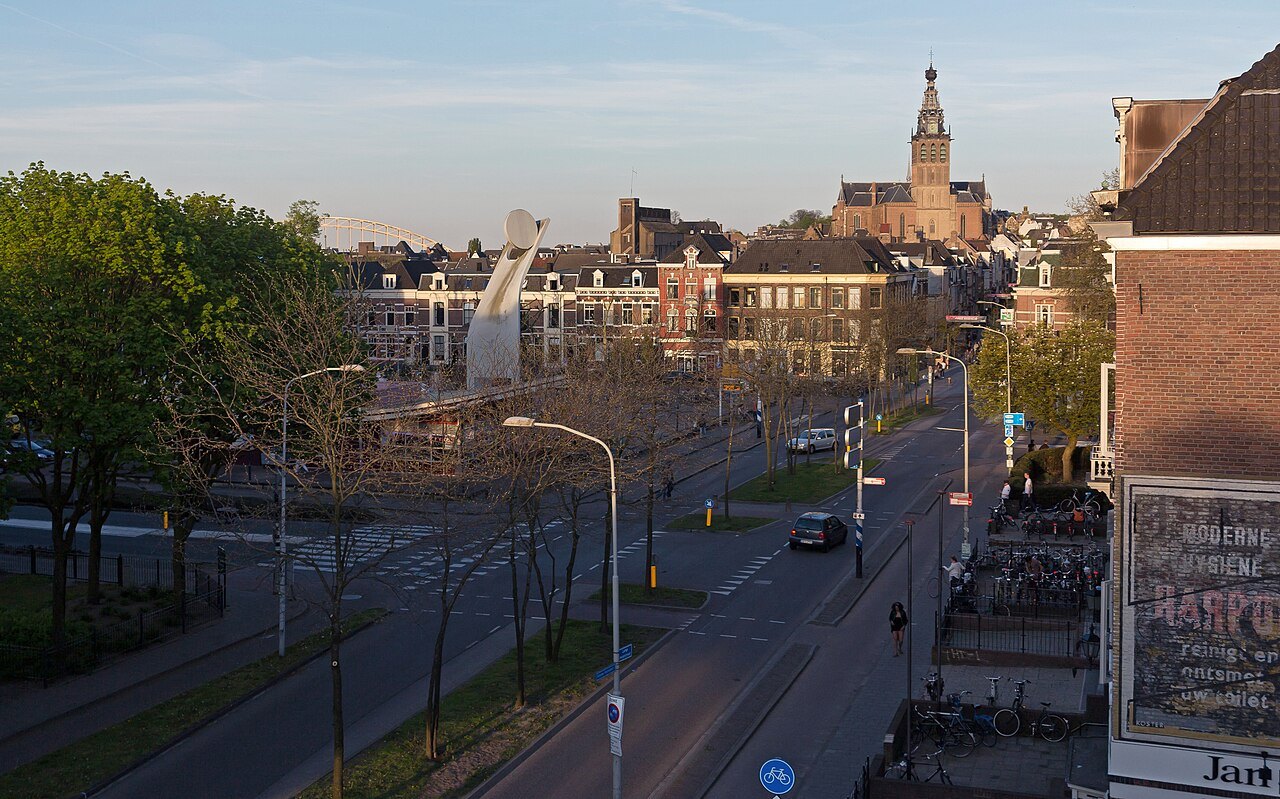

Stevenskerk is a landmark in Nijmegen, but a landmark changes as you approach it. From afar its outline dominates; in surrounding streets individual facades appear; at the entrance the human scale becomes important. A visit can connect those three levels even when some interior areas or the tower are inaccessible.
Use the approach as part of the visit
First find a view that includes neighbouring buildings. How does the church stand apart through height or roof shape? Choose one feature to recognise later. As you approach, that very feature may disappear behind other houses. This reveals how a townscape consists of changing fragments rather than one fixed image.
Stop for these comparisons where you will not obstruct pedestrians or other traffic. A map can explain your location but does not replace looking around. If visiting with others, agree a precise meeting point at ground level rather than simply saying that you will meet at the church.
Relate historical dates to the building
The official church history places the beginning of construction around 1254 and records consecration in 1272. These dates provide a starting point, not a claim that every element visible today belongs to that exact period. Look for explanations of later changes before assigning a century to an individual feature.
Within accessible interiors, light and the sequence of spaces can initially matter more than detailed knowledge. Then select one object from the interpreted furnishings. Read its own description instead of applying the history of the entire building to that work. Art added later also belongs to the development of a church used over many generations.
Establish the scope beforehand
Check current openings, events and any separate tower offers on the official site. Church access, exhibitions and climbing arrangements may differ. If you remain outside, comparing distant and close views still forms a complete small activity. Afterwards, you may recognise the same roofline on your way back. A navigational marker becomes a familiar part of the city without requiring you to know every historical detail.