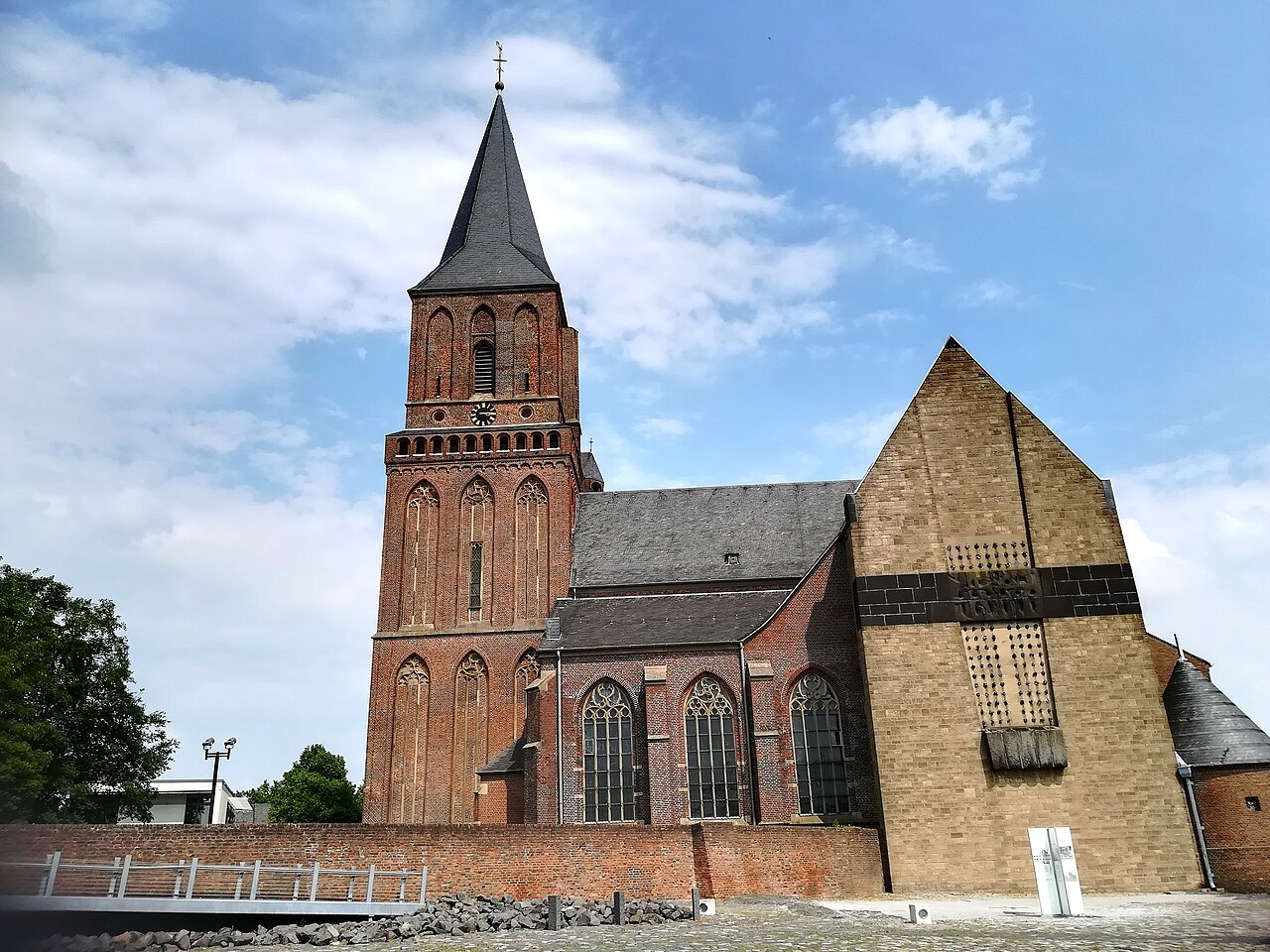

St Martini in Emmerich can first be understood through its location. The church belongs to the town's Rhine frontage and forms a recognisable outline with other prominent buildings. Close up, however, it does not present a single uncomplicated architectural style. Regional tourism information identifies Romanesque and Gothic elements alongside brick and tuff. These differences provide concrete starting points for a short, attentive visit.
From the river setting to the building
First view the church from a permitted position at some distance. What role does the tower play, and how does its relationship with neighbouring houses change as you move? There is no need to descend towards the water for a supposedly better picture. A safe public route provides the appropriate setting for observation.
Then move closer and compare large wall surfaces with the openings. Where can you recognise different materials? Colour alone is insufficient for identification; interpretation can help distinguish tuff from brick correctly. Visible repairs also say something about maintaining the building, but without evidence they should not be attributed to a particular event.
Several periods within one structure
The regional account describes a Romanesque raised choir over a crypt and Gothic parts of the building. This points to development and alteration, not a contest between correct and incorrect elements. A church may acquire its present form through additions, damage and restoration.
If an indoor visit is possible, bring one question inside: can you locate a feature you noticed outside within the interior? Not every area is accessible for this exercise, and a crypt or treasury may have separate visiting arrangements. Check those offers explicitly. General opening at a church entrance does not guarantee access to special rooms.
The church remains a place in use
Follow the parish's current guidance and set sightseeing aside during services. Choose another place for a break or extended conversation. After visiting, return to an exterior view: you may now recognise a material boundary or building volume more clearly. That recognition connects history and townscape without working through a long checklist of details. When time is limited, the same comparison can take place entirely outside.