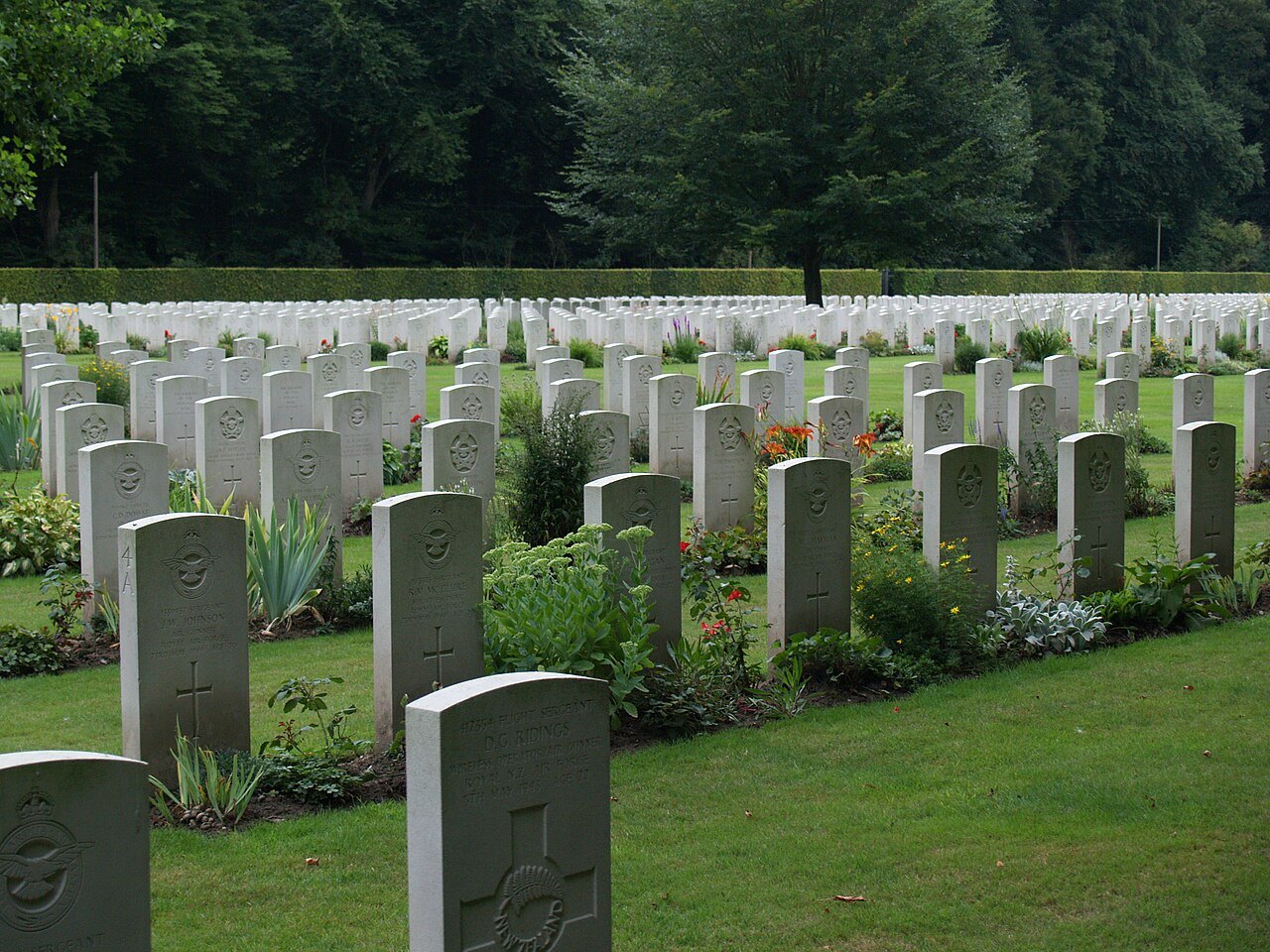
Reichswald Forest War Cemetery is a cemetery rather than an ordinary stop between attractions. From a distance its ordered layout can appear abstract. Individual names and inscriptions bring attention back to the people commemorated here. Allow time for quiet and avoid treating the visit as an exercise in covering as many rows or monuments as possible.
Read the historical context beforehand
The official Canadian remembrance page explains that the cemetery was established after the Second World War and that burials from western Germany were brought together here. This matters: a grave in this location does not automatically mean the person died immediately beside it. Anyone following a family history should consult the individual record and further documentation.
For a particular person, a full name, service information and grave reference are more helpful than a general photograph of the cemetery. Check the details with the responsible graves organisation before travelling. Similar names and alternative spellings can otherwise lead to confusion. A printed note is useful if you would prefer not to keep consulting a phone on site.
For a family connection, prepare two lists: what documents establish and what relatives have passed down. Both may matter to the visit, but they should not merge unnoticed. A family story can open a research question; a grave record may confirm a spelling or date. If accounts differ, note the discrepancy rather than inventing a quick explanation on site. Visiting the cemetery is an opportunity for remembrance and careful enquiry, not an obligation to settle an entire history in one day. Keep copies of the relevant references so that later investigation can return to the original evidence.
Read one inscription carefully
Choose one inscription and read it fully without adding an imagined life story. A name, date and, where provided, age are concrete information. They do not reveal what someone thought, how their family reacted or which decisions immediately preceded their death. Those gaps may become a reason to research further afterwards.
With children, begin with their questions. A plain explanation that people who died in war are buried here may initially be enough. Allow pauses and do not demand a particular emotional response. If a child does not want to continue, a short visit is more appropriate than insisting on a comprehensive walk.
Photograph without taking over the space
A photograph may document a grave or support later remembrance. Follow the cemetery's guidance and pay particular attention to other visitors. Do not include grieving people as part of an atmospheric scene. An unobstructed sightline is no reason to ask someone to move away.
Do not place bags on grave markers or use monuments as seats or storage surfaces. Eating, extended conversations and organising the next destination can wait until outside the commemorative part of the visit. These straightforward choices preserve the character of the place without requiring an artificially ceremonial manner.
Leave with a question you can investigate
If you want to make notes, record an exact reference and an open question. For example, where was this person originally buried, and which source explains the transfer? Keep established information separate from personal reflection. Consulting official records later can deepen the visit; the investigation need not be completed at the graveside. Leave some unstructured time afterwards rather than moving immediately into a noisy or tightly scheduled programme.