
When exploring Joseph Beuys's connections with Kleve, first distinguish what a place actually establishes. A former studio records a workplace. A museum may hold works or display them temporarily. A biographical connection, meanwhile, does not mean there is an artwork at every named location. Keeping these distinctions clear makes the search more precise and avoids a walk built around unsupported expectations.
The studio at Museum Kurhaus
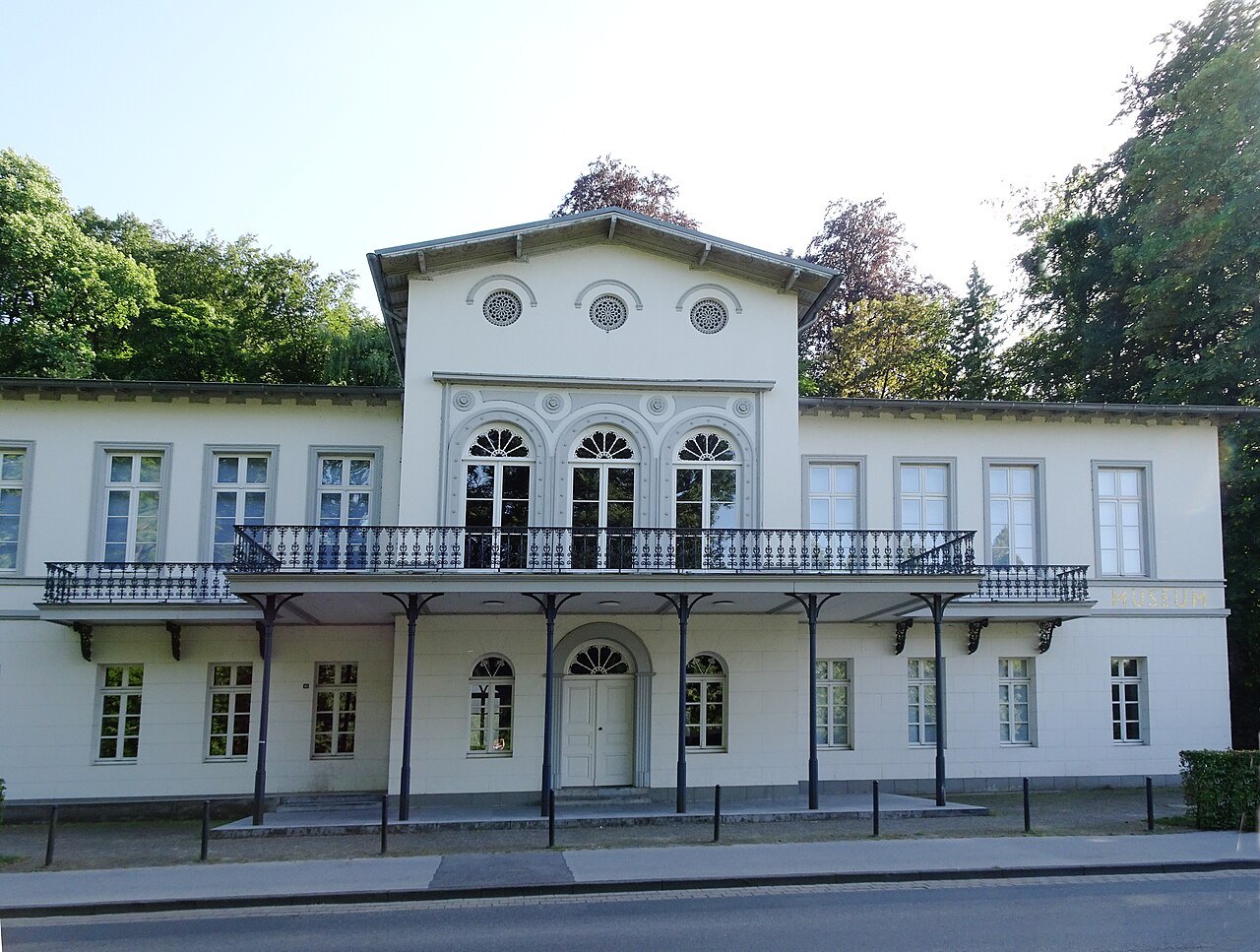
Museum Kurhaus explains the rooms Beuys used as a studio from the late 1950s until 1964. They had previously belonged to the building's bathing facilities. The restored studio presentation has been publicly accessible since 2012. Several uses therefore meet within the same rooms: bathing, artistic work and present-day museum interpretation.
During a visit, first examine the shape of the space. Which conditions might have affected working, storage and movement? Your answers remain observations unless a source explains a particular use. A room that appears preserved does not establish that every object occupies an unchanged position from the artist's working years.
Do not infer meaning directly from biography
Biography can illuminate a work, but it does not replace looking at the work itself. Begin with material, form and title when you encounter something on display. Then read which connection with the place or period of life is actually explained. Not every resemblance between an object in a studio and a motif in a work establishes a documented link.
Conversely, a work need not be displayed where it was made to have a connection with Kleve. The current collection, earlier exhibitions and historic workplace are different layers. An old exhibition announcement does not prove a present display. Check current museum information if a particular work determines whether you travel.
Keep a small comparison note
For later reflection, three columns on a sheet are enough: place, established connection and open question. For the studio, the connection might be its documented use, while the question concerns a working method. For an artwork, record its title and explanation rather than only the artist's name. Later information can then be matched accurately.
Do not visit as many stops as possible merely because they share a famous name. Looking closely at one room and one work already creates a meaningful relationship. Further research can then use the official museum descriptions selectively. Your personal response to the art may remain open; biography need neither validate it nor replace it with a finished interpretation.