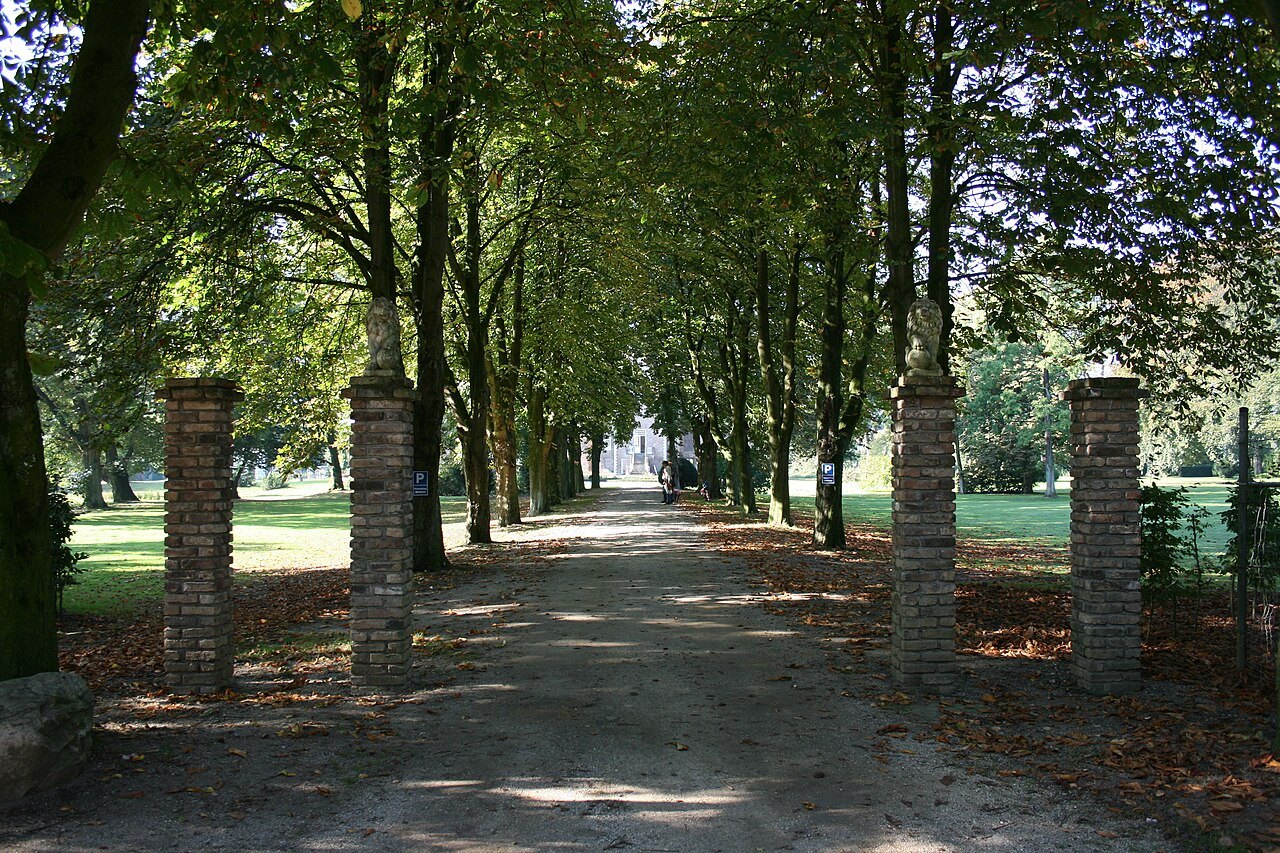

Schloss Hertefeld cannot be understood through a single building phase. Its official account begins with a fortified house recorded in 1322 and follows subsequent changes. The important point is not to compress that development into an image of an unchanged historic castle. Visible architecture, historical interpretation and present-day use each form a separate layer.
Three questions for the same building
First ask what is visible today. Describe shapes and materials before applying historical labels. An opening in a wall, a roof or a junction between structures can be recognised without immediately knowing when it was built. Where photography and access are permitted, capture one such connection as well as the most representative facade.
The second question is what the documented history explains. The estate's account identifies baroque changes and an eighteenth-century French garden among its phases. Such information belongs to particular periods of development. It does not establish that every present garden area reproduces the earlier design unchanged. Look for explained connections rather than mentally completing missing elements as though they were certain.
Third, consider how the place is used now. Hertefeld also offers accommodation and events. These uses affect which rooms are accessible and how visitors can move through the site. They belong to the monument's present life rather than merely disrupting its historical appearance. Equally, a hotel offer should not be interpreted as unrestricted opening of the entire property.
Turn those layers into a visit
Check the specific offer and its access arrangements beforehand. If building history is your main interest, ask about an appropriate visiting opportunity. Current information matters especially when an event occupies part of the property. An apparently empty area is not automatically public, and an open door is not a visitor sign.
On site, a small comparison is enough. Choose two visible parts that look different and note the distinction. Material, surface and proportion are useful categories. Leave their ages unresolved until an explanation is available. This careful approach makes rebuilding and reuse more understandable without assigning an invented origin to every stone.
End your walk where the booked or permitted area ends. An unanswered historical question can be pursued later through the official account. A visit does not have to resolve every layer to give a clearer impression of how a building has changed and remained in use over a long period.