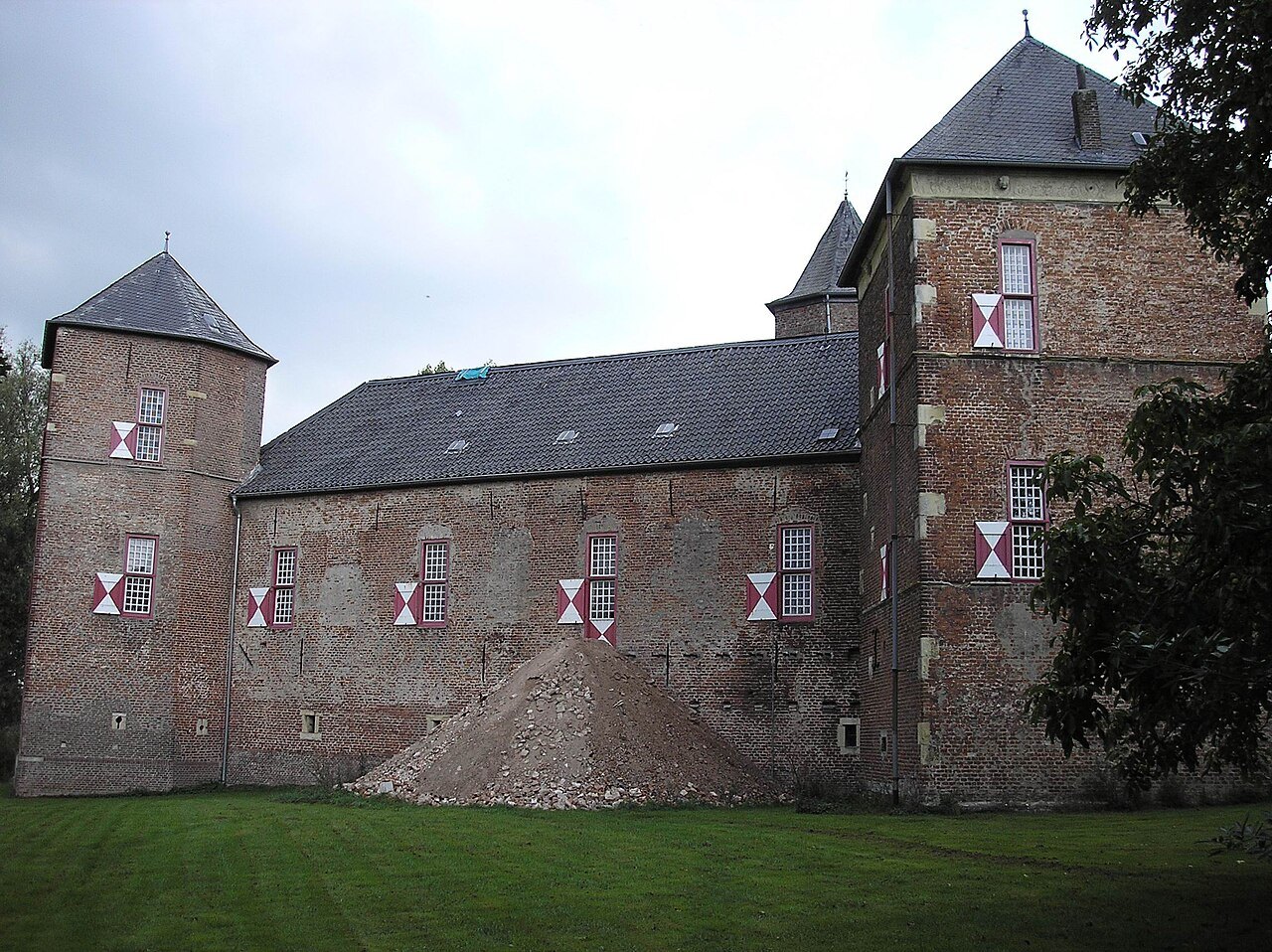
Haus Zelem offers a useful opportunity to consider the distinction between a place of historic interest and an estate that is occupied or used. Inclusion in a tourism listing establishes interest, not open interiors or unrestricted access to a courtyard. Plan to look from outside only where public access is genuinely established, and avoid making the outing depend on an unverified camera position.
Clarify access before travelling
The regional tourism account names Haus Zelem and its historic connections with the Palant and Wylich families. It provides an introduction to the history. For an actual visit, however, current information from the estate or an explicitly advertised event matters more. Without that information, do not assume a tour, garden opening or interior visit.
A line on a map is not evidence of a public footpath either. Pay attention to signs, gates and the way the property is being used. Do not park across an entrance to take a quick photograph. If there is no suitable place to stop outside private areas, continuing elsewhere is the appropriate decision. Historical interest does not create a right to a particular viewpoint.
Work with the view that is available
From a permitted position, first consider the arrangement of the buildings. Which appears to be the main structure, which parts belong to the approach, and how do trees affect the view? Describe only what you can see. A concealed area cannot be filled in with assumptions. A limited exterior view can itself reveal how an estate belongs within a working and inhabited landscape.
A photograph does not need to remove every obstruction. A view from farther away may explain the relationship between building and surroundings better than a tight frame through a fence. Avoid deliberately looking into private windows or places where people are spending time. The subject is the architecture, not the lives of those using the property.
Do not force a longer visit
A brief look from outside is a different kind of outing from a museum visit. Combine it only with another destination whose access is established, and do not build waiting time at a closed gate into your day. If you later find a public event, check its date and booking arrangements afresh. A past opening does not establish permanent visitor access. Keeping these distinctions clear makes planning more reliable while acknowledging that historic buildings still have owners and present-day uses.