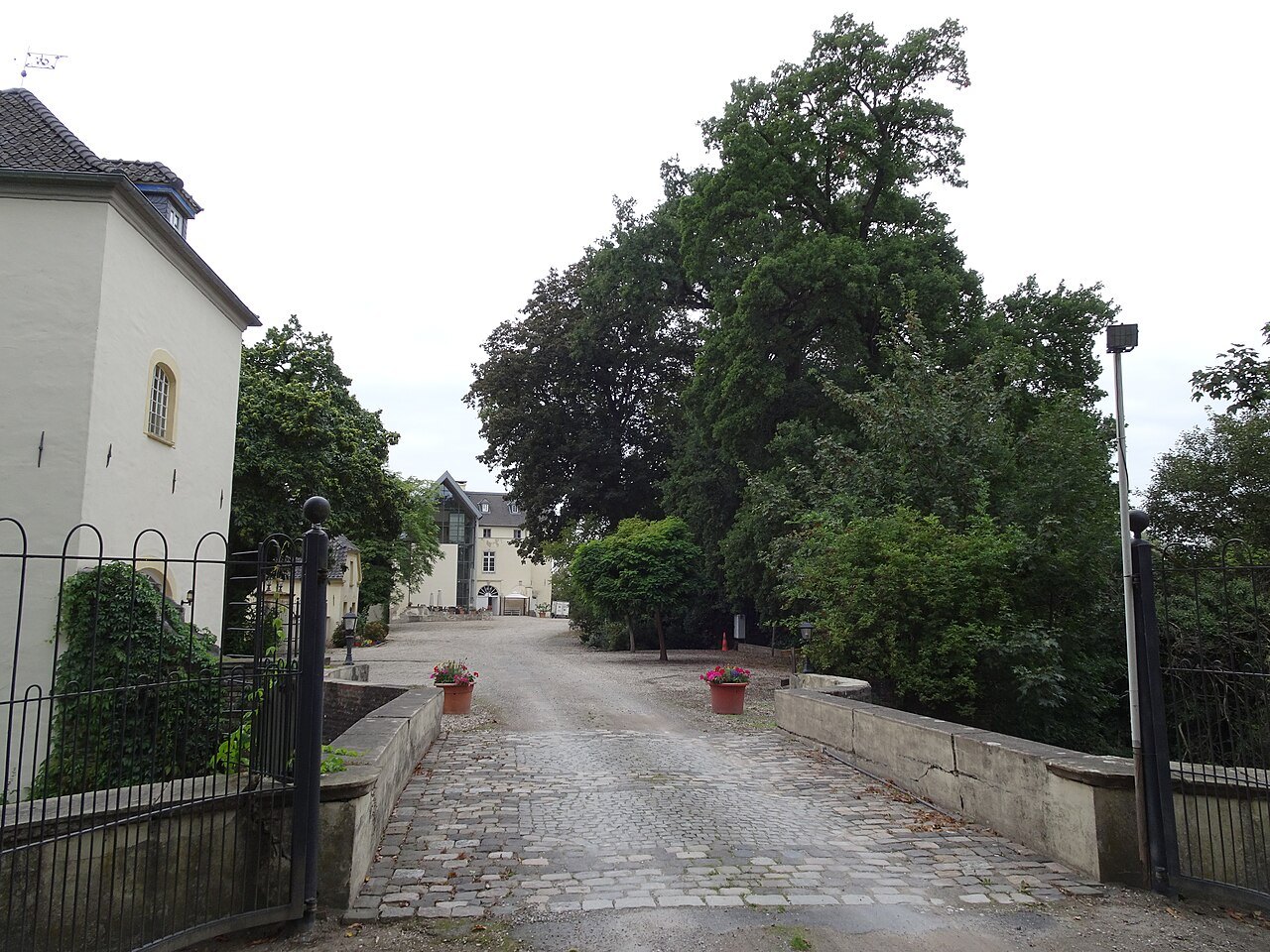

Burg Boetzelaer at Appeldorn in Kalkar shows how strongly rebuilding can shape the present appearance of a historic structure. The operator describes extensive restoration and partial reconstruction. Looking only for the oldest visible stone therefore misses part of the story: the decision to make a damaged place usable again has also changed its form.
Surviving, added and reused
Do not try to distinguish old from new by colour alone. Old stone may have been cleaned, while an addition may deliberately match its surroundings. Begin with larger relationships: where structures meet, how openings organise a wall and how the approach is arranged. Historical interpretation can then help explain visible differences.
Rebuilding can make a spatial effect understandable when it would be difficult to imagine from a ruin. It also introduces decisions. Which form has been reinstated, and which breaks remain visible? These questions are more precise than declaring a building either wholly authentic or entirely new. Reliable answers require information about the particular intervention.
Water and landscape belong to the view
The property stands beside Boetzelaerer Meer. The nearby water contributes to its spatial effect but does not invite access to every part of the shore. Use only permitted approaches and avoid shortcuts through sensitive vegetation. A view from a distance may be sufficient to understand the setting.
For photographs, compare an overall view with a detail. The wide image presents the castle as a coherent form; the detail reveals materials and junctions. Each tells a different story. Do not label a picture with a building phase that you merely suspect. A straightforward place name is preferable to an authoritative-sounding but unsupported date.
Plan around a working property
Burg Boetzelaer now has uses including accommodation and events. Establish which offer is actually available for your visit. Office hours, room bookings and public sightseeing are different arrangements. If seeing inside matters, ask beforehand about that specific possibility. A short exterior visit should work without interior access. Respect guests, events and working routes, recognising the historic building as a place in current use rather than an unrestricted backdrop.