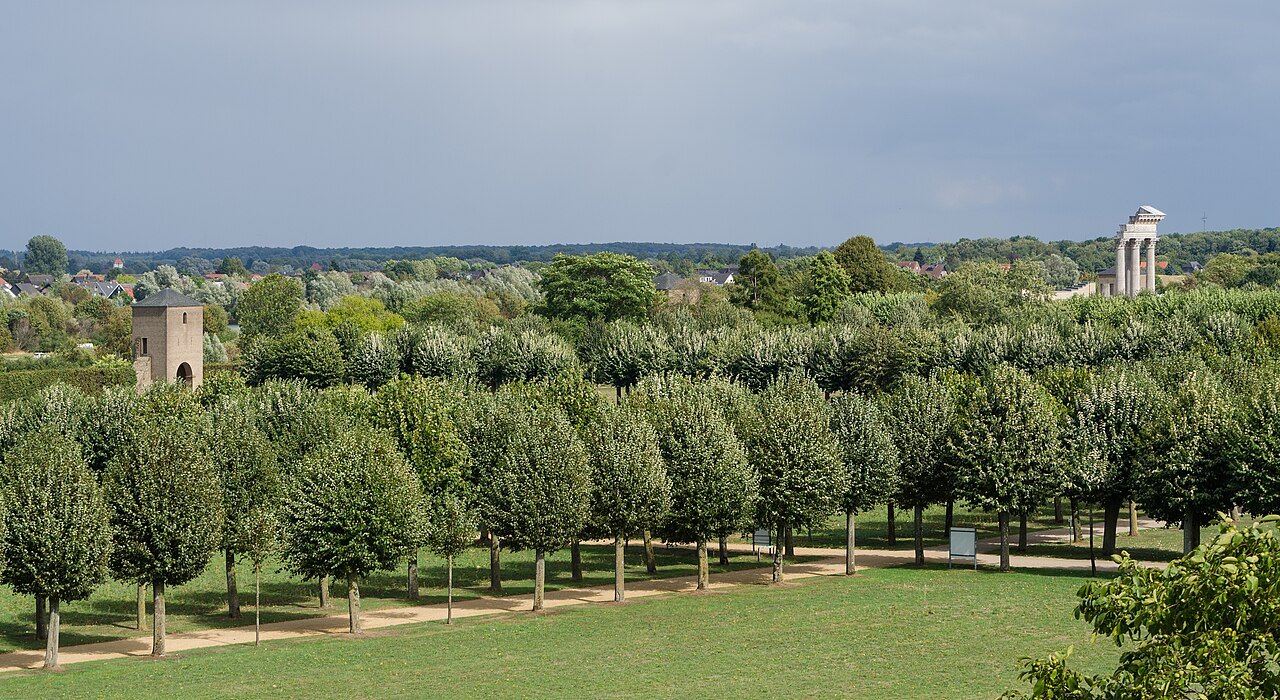

At Xanten Archaeological Park, accessible buildings stand on the site of the Roman town of Colonia Ulpia Traiana. Their vivid presence can create a misunderstanding: a complete wall is not automatically a wall that has survived since antiquity. During your visit, distinguish archaeological evidence, reconstruction and the modern presentation for visitors. These complement one another but answer different questions.
Start with one building
Choose a building with an explanation and read it before taking photographs. Look for statements about what was excavated and what has been added. Surviving foundations may establish a plan well, while height or furnishings require comparisons with other evidence. A reconstruction makes a reasoned interpretation physically understandable; it is not an original condition retrieved without uncertainty.
The craftspeople's houses invite questions about everyday life. Where might work have taken place, how do interior spaces relate to the street, and which routes would people have followed through the building? Phrase your impressions as questions. Whether an activity actually occurred in a particular position should be established by the interpretation of the evidence, not simply by the effect of today's furnishings.
Experience scale, then look for evidence
A photograph often captures only the most dramatic view. Where permitted, move closer and then step back again. This makes the size of a column, the width of a passage or the effect of an enclosed room easier to grasp. Compare a drawing or model with the building afterwards. What does each representation explain more clearly, and what remains invisible?
With children, try a search involving three categories: something old, something reconstructed and something unmistakably modern, such as an information panel or barrier. Avoid quickly assigning an unfamiliar element to a category. Looking up the answer together is part of the activity. Modern additions are not mistakes: they help protect the site and make it understandable and usable.
Connect the museum and outdoor site
Since 2021 the park has formed part of the Lower German Limes UNESCO World Heritage property. That context explains its significance but does not replace examining individual evidence. Carry a specific question from the outdoor site into the Roman Museum, perhaps about building materials or everyday objects. Conversely, a small museum object can help you imagine how a room you saw outside might have been used.
Allow for walking between the different areas. Rain does not turn the entire park into an indoor museum, and its entrances are not interchangeable. Check the current site plan, opening arrangements and temporary restrictions. Especially with children, allow play and food breaks to stand on their own instead of turning every pause into another history lesson.
Before leaving, write down what you now know from a find, what you understand through reconstruction and what remains your own supposition. This distinction is more useful than a list of every building visited. It also leaves room for archaeological knowledge to develop through further investigation rather than treating the present display as the final word.
A reconstruction question in practice
Imagine a presented room containing a table and several vessels. Initially, all you can establish is that this arrangement belongs to today's interpretation. Then ask whether comparable objects were found at that location, are known from other excavations or have been added to illustrate use. The answer may differ for each element. This does not make the scene less useful; it makes it easier to read accurately. An exhibition can explain a plausible activity without claiming that precisely this table and these objects stood there.
Apply the distinction to your photographs too. A caption such as reconstructed interior describes the situation more clearly than Roman room if the latter might imply a completely surviving original. Keep the explanation with the photograph so that uncertainty is not lost when you revisit or share the image later.